Columbia, Kentucky Drug and Alcohol Rehab Resources

Home > Columbia, Kentucky Drug and Alcohol Rehab Resources

Columbia, Kentucky Drug and Alcohol Rehab Resources

Lexington Addiction Center provides structured addiction treatment resources for Columbia and Adair County residents, including medical detox support, PHP, IOP, outpatient care, medication-assisted treatment, dual diagnosis services, family support, and long-term recovery planning.

Drug and Alcohol Rehab Resources for Columbia, Kentucky

When families search for Columbia, Kentucky drug and alcohol rehab resources, they are often looking for care that is clinically reliable, accessible, and realistic for everyday life.

Columbia is a Central Kentucky community and the county seat of Adair County, with Columbia University, local employers, surrounding rural communities, and access to regional healthcare and treatment resources. Like communities across Kentucky, Columbia and Adair County have been affected by opioid addiction, alcohol use disorder, fentanyl exposure, methamphetamine use, prescription drug misuse, and co-occurring mental health challenges.

Lexington Addiction Center helps Kentucky residents find structured treatment options that address substance use, mental health symptoms, relapse risk, family stress, and long-term recovery needs.

The Need for Addiction Treatment Near Columbia, KY

Substance use disorders can affect physical health, emotional wellbeing, employment, housing, finances, relationships, and family stability. For many people, addiction also overlaps with anxiety, depression, trauma, PTSD, bipolar disorder, grief, or chronic stress.

  • Alcohol, opioid, fentanyl, heroin, methamphetamine, cocaine, and prescription drug addiction
  • Withdrawal symptoms, cravings, and medical stabilization needs
  • Co-occurring anxiety, depression, trauma, PTSD, and mood disorders
  • Relapse patterns, isolation, emotional triggers, and family strain
  • Aftercare planning, local support, and long-term recovery accountability

Programs and Services Available to Columbia Residents

Lexington Addiction Center offers a step-down model of care that can adapt as each client stabilizes and builds recovery momentum.

Medically Coordinated Detox Support

Detox may be needed when alcohol, opioids, benzodiazepines, or other substances create withdrawal risk.

Medication-Assisted Treatment

MAT may help reduce cravings and support stabilization for opioid or alcohol use disorders when clinically appropriate.

Partial Hospitalization Program (PHP)

PHP provides structured day treatment with therapy, groups, relapse prevention, and clinical accountability.

Intensive Outpatient Program (IOP)

IOP provides consistent therapy and group support with more flexibility than PHP.

Outpatient Program (OP)

Outpatient care supports ongoing therapy, relapse prevention, accountability, and recovery connection.

Dual Diagnosis Treatment

Dual diagnosis care addresses substance use and mental health symptoms together.

Treating Addiction and Mental Health Together

Integrated care helps clients understand how emotional distress, cravings, sleep disruption, trauma, family conflict, and substance use interact.

Anxiety and Chronic Stress

Anxiety and chronic stress can intensify cravings and interfere with recovery.

Depression and Low Motivation

Depression and emotional numbness can interfere with treatment participation and daily routines.

PTSD and Trauma

Trauma responses and unresolved emotional pain may contribute to substance use and relapse patterns.

Mood Instability

Bipolar symptoms and emotional dysregulation may require coordinated mental health and addiction treatment.

Why Columbia Residents Consider Lexington Addiction Center

Individualized Care

Treatment planning is based on history, goals, symptoms, and real-world needs.

Flexible Levels of Care

PHP, IOP, outpatient care, MAT, and continuing care allow treatment intensity to change over time.

Family Support

Family involvement can help improve communication, boundaries, trust, and the recovery environment.

Long-Term Planning

Relapse prevention, aftercare, and ongoing behavioral health support are incorporated into discharge planning.

Support Groups and Recovery Resources Near Columbia

Peer support and community resources can help people stay connected long after formal treatment ends. Columbia residents may benefit from local or nearby recovery meetings, family support groups, sober living referrals, outpatient therapy, psychiatric follow-up, and behavioral health resources.

Helpful recovery supports may include Alcoholics Anonymous, Narcotics Anonymous, SMART Recovery, Celebrate Recovery, Al-Anon, NAMI resources, and sober social connections.

Admissions, Cost, Insurance and Logistics

Admissions begins with a confidential conversation about substance use, mental health symptoms, medical needs, safety concerns, prior treatment history, and recovery goals.

The admissions team can verify insurance benefits, explain treatment options, review possible costs, and help determine the appropriate level of care.

Frequently Asked Questions About Columbia, Kentucky Drug and Alcohol Rehab Resources

What addiction treatment services are available to residents of Columbia, Kentucky?

Columbia residents may access medically coordinated detox support, PHP, IOP, outpatient treatment, medication-assisted treatment when clinically appropriate, dual diagnosis care, family support, and aftercare planning through Lexington Addiction Center.

How do treatment providers tailor care for people from Columbia?

Treatment begins with an assessment of substance use history, mental health symptoms, medical needs, safety concerns, family responsibilities, transportation needs, and recovery goals.

Does insurance cover rehab near Columbia, KY?

Many insurance plans cover medically necessary addiction treatment and mental health services. Coverage varies by plan, level of care, network status, and authorization requirements.

Can Lexington Addiction Center treat opioid or fentanyl addiction for Columbia residents?

Yes. Treatment support may include clinical assessment, detox coordination when needed, therapy, relapse prevention, and medication support when clinically appropriate.

Is dual diagnosis treatment available?

Yes. Dual diagnosis treatment addresses substance use and co-occurring mental health conditions together.

Is outpatient rehab available for Columbia residents?

Yes. Lexington Addiction Center offers PHP, IOP, outpatient programming, and continued care planning.

How far is Lexington Addiction Center from Columbia?

Travel time between Columbia and Lexington varies by starting point, traffic, and route.

Can I continue working or going to school while receiving treatment?

Many clients can continue work, school, or family responsibilities during IOP or outpatient care.

Does Lexington Addiction Center offer medication-assisted treatment for Columbia residents?

MAT may be available when clinically appropriate for opioid or alcohol use disorder.

What happens after PHP or IOP?

Clients may step down into standard outpatient treatment, medication management, peer support, family services, or another continuing-care plan.

Can family members be involved in treatment?

Family therapy or education may be included when clinically appropriate.

How do I get started?

Contact Lexington Addiction Center so admissions can answer questions, verify insurance, discuss treatment options, and help determine the appropriate level of care.

What Sets Lexington Addiction Center Apart: Premium Amenities & Personalized Care

Comfortable & Welcoming Environment

A supportive outpatient setting helps clients focus on treatment while maintaining privacy and dignity.

Experienced Clinical Team

Clients receive coordinated support from addiction and mental health professionals.

Family Therapy Support

Family services can help improve communication, rebuild trust, and strengthen recovery support.

Small Group Environment

Smaller groups can support participation, accountability, and individualized attention.

Continuum of Care

Clients can move between PHP, IOP, and outpatient services as clinical needs change.

Dual Diagnosis Integration

Co-occurring mental health and substance use concerns can be addressed together.

Geographic and Service Area Notice

Location-based pages provide general information about addiction treatment services and regional availability. Services may vary by availability, clinical appropriateness, and admissions eligibility.

In emergencies, including overdose or severe withdrawal crises, call 911 immediately. Insurance coverage must be verified directly.

Start Addiction Treatment Near Columbia, KY

Lexington Addiction Center can verify insurance, answer questions, and help determine the right level of care for you or your loved one.

→ Contributors
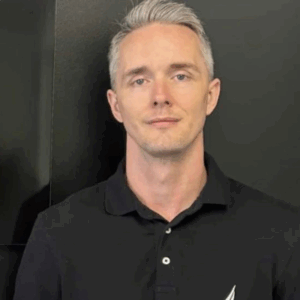
Portrait of Dr. Vahid Osman, Board-Certified Psychiatrist and Addictionologist
Medically Reviewed By
Dr. Vahid Osman, M.D.
Board-Certified Psychiatrist & Addictionologist
Dr. Vahid Osman is a Board-Certified Psychiatrist and Addictionologist with extensive experience treating mental illness, chemical dependency, and developmental disorders. Dr. Osman trained in Psychiatry in France and in Austin, Texas. Read more.
Portrait of Josh Sprung, L.C.S.W.
Clinically Reviewed By
Josh Sprung, L.C.S.W.
Board-Certified Clinical Social Worker
Joshua Sprung serves as a Clinical Reviewer at Lexington Addiction Center, bringing a wealth of expertise to ensure exceptional patient care. Read more.
→ Accreditations & Licenses

The Joint Commission
Awarded The Gold Seal of Approval® for meeting rigorous performance standards in safety, quality, and patient care.
LegitScript Certified
Validates compliance with laws and regulations, confirming transparency and accountability in addiction treatment marketing.
BBB Accredited
Demonstrates ethical business practices, client satisfaction commitment, and a trusted reputation in the community.
Psychology Today Verified
Verified listing on Psychology Today, a trusted directory for addiction treatment providers and behavioral health centers.
HIPAA Compliant
Ensures all patient health information is protected and managed under strict federal privacy and security standards.
NAATP Member
Lexington Addiction Center is a proud member of the National Association of Addiction Treatment Providers (NAATP).
5-Star Google Reviews
Recognized for consistent 5-star ratings, reflecting excellent care and trusted patient experiences at Lexington Addiction Center.
Help.org Recognition
Recognized by Help.org for quality addiction treatment services and community impact.
→ Sources

Connery, H. S. (2015). Medication-assisted treatment of opioid use disorder: Review of the evidence and future directions. Harvard Review of Psychiatry, 23(2), 63-75. https://pmc.ncbi.nlm.nih.gov/articles/PMC9772240/

Columbia Police Department. (n.d.). https://www.columbiapd.org/

Kentucky Court of Justice. (n.d.). Specialty courts. https://www.kycourts.gov/Court-Programs/Specialty-Courts/Pages/default.aspx

Affordable Housing Online. (n.d.). Housing Authority of Columbia. https://affordablehousingonline.com/housing-authority/Kentucky/Housing-Authority-of-Columbia/KY064

Kentucky Department for Behavioral Health, Developmental and Intellectual Disabilities. (n.d.). Kentucky Recovery Housing Network. https://dbhdidtest.ky.gov/sud/krhn

Kentucky Association of Recovery Residences. (n.d.). https://kyarr.org/

U.S. Department of Veterans Affairs. (n.d.). https://www.va.gov/

Alcoholics Anonymous. (n.d.). Find AA. https://www.aa.org/find-aa

Narcotics Anonymous. (n.d.). Meeting search. https://www.na.org/meetingsearch/

SMART Recovery. (n.d.). https://smartrecovery.org/

Al-Anon Family Groups. (n.d.). Find an Al-Anon meeting. https://al-anon.org/al-anon-meetings/find-an-al-anon-meeting/

Rigg, K. K., & Monnat, S. M. (2015). Urban vs. rural differences in prescription opioid misuse among adults in the United States: Informing region specific drug policies and interventions. International Journal of Drug Policy, 26(5), 484-491. https://doi.org/10.1016/j.drugpo.2014.10.001

Centers for Disease Control and Prevention. (2024). Understanding the opioid overdose epidemic. https://www.cdc.gov/overdose-prevention/index.html

National Institute on Drug Abuse. (2023). Methamphetamine research report. https://nida.nih.gov/publications/research-reports/methamphetamine

Substance Abuse and Mental Health Services Administration. (2021). Key substance use and mental health indicators in the United States: Results from the 2020 National Survey on Drug Use and Health (HHS Publication No. PEP21-07-01-003). https://www.samhsa.gov/data/

National Institute on Alcohol Abuse and Alcoholism. (2023). Alcohol facts and statistics. https://www.niaaa.nih.gov/publications/brochures-and-fact-sheets/alcohol-facts-and-statistics

Esser, M. B., Sherk, A., Liu, Y., et al. (2020). Deaths and years of potential life lost from excessive alcohol use — United States, 2011–2015. Morbidity and Mortality Weekly Report, 69(39), 1428-1433. https://doi.org/10.15585/mmwr.mm6939a6

Substance Abuse and Mental Health Services Administration. (2020). Treatment for co-occurring disorders. SAMHSA Publication No. PEP20-06-04-001. https://store.samhsa.gov/product/treatment-co-occurring-disorders/pep20-06-04-001

Drake, R. E., O’Neal, E. L., & Wallach, M. A. (2008). A systematic review of psychosocial research on psychosocial interventions for people with co-occurring severe mental and substance use disorders. Journal of Substance Abuse Treatment, 34(1), 123-138. https://doi.org/10.1016/j.jsat.2007.01.011

McHugh, R. K., Hearon, B. A., & Otto, M. W. (2010). Cognitive behavioral therapy for substance use disorders. Psychiatric Clinics of North America, 33(3), 511-525. https://doi.org/10.1016/j.psc.2010.04.012

Linehan, M. M., Dimeff, L. A., Reynolds, S. K., et al. (2002). Dialectical behavior therapy versus comprehensive validation therapy plus 12-step for the treatment of opioid dependent women meeting criteria for borderline personality disorder. Drug and Alcohol Dependence, 67(1), 13-26. https://doi.org/10.1016/S0376-8716(02)00011-X

Police Executive Research Forum. (2016). Building successful partnerships between law enforcement and public health agencies to address opioid use. https://www.policeforum.org/assets/PolicingOpioidCrisis.pdf

Substance Abuse and Mental Health Services Administration. (2019). Law enforcement-behavioral health partnership strategies. SAMHSA Publication No. PEP19-LEBHPART. https://store.samhsa.gov/product/Law-Enforcement-Behavioral-Health-Partnership-Strategies/PEP19-LEBHPART

Substance Abuse and Mental Health Services Administration. (2019). Recovery housing: Best practices and opportunities. https://www.samhsa.gov/homelessness-programs-resources

Jason, L. A., Olson, B. D., Ferrari, J. R., & Lo Sasso, A. T. (2006). Communal housing settings enhance substance abuse recovery. American Journal of Public Health, 96(10), 1727-1729. https://doi.org/10.2105/AJPH.2005.070839

U.S. Department of Veterans Affairs. (n.d.). PTSD and substance abuse in veterans. National Center for PTSD. https://www.ptsd.va.gov/understand/related/substance_abuse_vet.asp

Seal, K. H., Cohen, G., Waldrop, A., et al. (2011). Substance use disorders in Iraq and Afghanistan veterans in VA healthcare, 2001-2010: Implications for screening, diagnosis and treatment. Drug and Alcohol Dependence, 116(1-3), 93-101. https://doi.org/10.1016/j.drugalcdep.2010.11.027

Kelly, J. F., Humphreys, K., & Ferri, M. (2020). Alcoholics Anonymous and other 12-step programs for alcohol use disorder. Cochrane Database of Systematic Reviews, 3(3), CD012880. https://doi.org/10.1002/14651858.CD012880.pub2

White, W. L. (2009). Peer-based addiction recovery support: History, theory, practice, and scientific evaluation. Great Lakes Addiction Technology Transfer Center. https://www.naadac.org/

Substance Abuse and Mental Health Services Administration. (2004). Substance abuse treatment and family therapy. Treatment Improvement Protocol (TIP) Series, No. 39. https://www.ncbi.nlm.nih.gov/books/NBK64269/

Rowe, C. L. (2012). Family therapy for drug abuse: Review and updates 2003-2010. Journal of Marital and Family Therapy, 38(1), 59-81. https://doi.org/10.1111/j.1752-0606.2011.00280.x

Marlatt, G. A., & Donovan, D. M. (2005). Relapse prevention: Maintenance strategies in the treatment of addictive behaviors (2nd ed.). Guilford Press.

Yes, Your Insurance Covers Detox and Rehab Treatment

Complete a free, confidential Verification of Benefits to learn more about what resources may be available to you.

Contact Us Today

Lexington Addiction Center - logo

Addiction and co-occurring disorders don’t have to control your life. Lexington Addiction Center is waiting with open arms to give you the tools necessary for lasting change. Reach out to us today to learn more.