
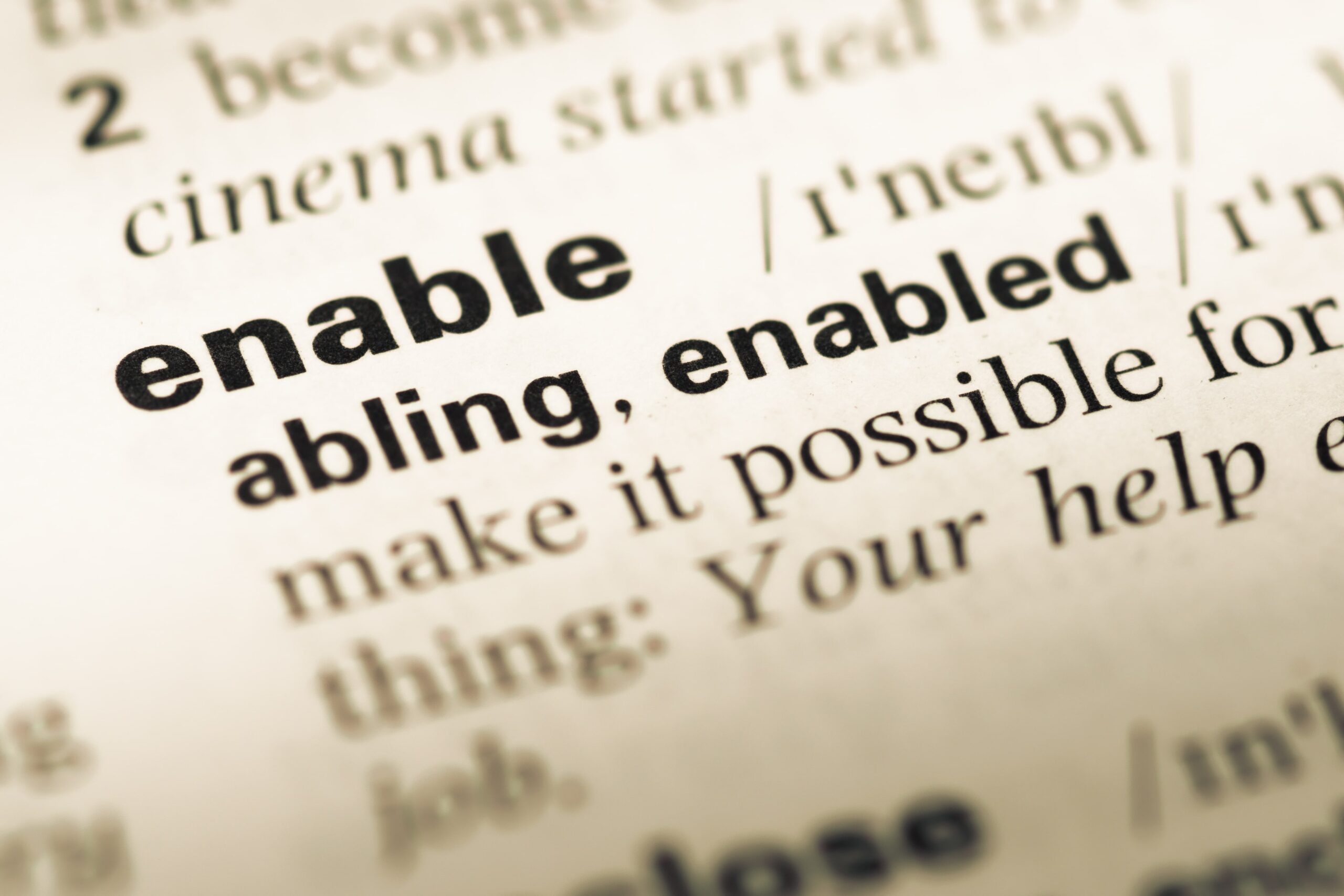
the words enable in a dictionary close up

Signs of Enabling a Loved One’s Addiction

How to Truly Help a Loved One Struggling With Addiction

Supporting a loved one battling addiction is one of the most challenging journeys anyone can face. Often, family and friends don’t realize that their well-meaning actions may actually perpetuate the cycle of substance abuse. This pattern—known as enabling—can delay recovery and take a serious toll on everyone involved.

Understanding how to recognize and stop enabling behaviors is essential. By learning to set healthy boundaries and encouraging professional help, you can make a positive difference in your loved one’s recovery journey—and protect your own well-being along the way.

Recognizing When Your Loved One Needs Help

Addiction rarely exists in isolation—it affects the entire family. Unfortunately, enabling only prolongs suffering for both the person using substances and those around them.

Signs your loved one may need professional addiction treatment include:

  • Sudden mood swings or personality changes
  • Decline in physical health or appearance
  • Withdrawing from responsibilities or relationships
  • Financial or legal troubles

Rehabilitation programs can provide a structured environment where your loved one can begin to heal. Early intervention can shorten the path of self-destruction and open the door to long-term recovery.

The Importance of Detox and Compassionate Intervention

Approaching someone about their substance use is never easy. Fear of conflict or rejection often holds family members back. But addiction thrives in silence.

Keep in mind: many individuals battling substance abuse already carry immense shame and guilt. A gentle, compassionate approach is far more likely to encourage them to accept help than anger or ultimatums.

Detoxification, the first step in most recovery programs, allows the body to safely rid itself of drugs and alcohol under medical supervision. Supporting your loved one in seeking detox can be the turning point toward a healthier life.

What Is Enabling?

Enabling involves actions—intentional or not—that protect someone from the consequences of their addiction. Common examples include:

  • Covering up mistakes or lying to others
  • Giving financial assistance to avoid hardship
  • Rescuing them from legal or social consequences
  • Ignoring clear warning signs of substance misuse

While these behaviors may feel like acts of love, they often shield the individual from facing the reality of their situation—ultimately allowing the addiction to deepen.

The Signs You Might Be Enabling

You may be enabling if you:

✔️ Make excuses for your loved one’s behaviors
✔️ Bail them out of trouble (financially or otherwise)
✔️ Put their needs consistently above your own
✔️ Struggle to say “no” or set boundaries

Recognizing these patterns is the first step toward breaking free and creating healthier dynamics for everyone involved.

The Cost of Enabling: For Them and For You

Enabling not only harms your loved one but also erodes your own mental and emotional health. Constantly rescuing someone can lead to:

  • Emotional burnout
  • Anxiety and depression
  • Strained relationships with other family members
  • Financial hardship

By stepping back and letting your loved one experience the natural consequences of their actions, you empower them to make meaningful changes.

Practicing Tough Love and Healthy Boundaries

Boundaries aren’t about punishment—they’re about protection. For both you and your loved one, boundaries help define what is and isn’t acceptable.

Examples of healthy boundaries include:

🚫 Stopping financial support
🚫 Refusing to lie or cover up their behavior
🚫 Declining to bail them out of legal trouble

Instead of enabling, focus on supporting their recovery efforts by encouraging treatment and offering emotional support within clear limits.

Understanding Codependency

Codependency often exists alongside enabling. It occurs when one person sacrifices their own needs to care for someone else—usually at great emotional cost.

Signs of codependency:

  • Fear of upsetting or abandoning the other person
  • Constant worry about their behavior
  • Difficulty expressing your own needs
  • Feeling responsible for their happiness

Breaking free from codependency often requires support, therapy, and self-care practices.

Hope and Healing Are Possible

Addiction doesn’t just affect one person—it impacts entire families. The good news? Change is possible. By stopping enabling behaviors and encouraging professional help, you create space for healing and recovery on both sides.

At Lexington Addiction Center, we provide a compassionate and supportive environment where individuals can begin their journey to sobriety. Our team understands the complex dynamics of addiction and offers resources for families to heal as well.

📞 Call us today to learn how we can help your loved one take the first step toward a healthier, happier life.


FAQ: Signs of Enabling a Loved One’s Addiction

  • What does it mean to “enable” a loved one’s addiction?

    Enabling refers to actions — often done with care and good intentions — that unintentionally protect someone from the natural consequences of their addiction. While it may seem like helping or supporting someone, enabling can actually maintain or deepen the addiction by removing obstacles that would otherwise encourage the person to seek help. For example, rescuing a loved one from the repercussions of substance use — such as paying their bills, making excuses for behavior, or covering up issues at work or with family — can prevent them from fully facing how their addiction affects their life. Enabling gives a false sense of security, which can reduce motivation for change and prolong the unhealthy cycle. It’s a form of protective behavior that keeps the person safe from immediate harm but blocks the realization that lasting change requires accountability and intervention. Understanding what enabling looks like is the first step in recognizing when support is helping and when it may be unintentionally hurting long-term recovery prospects.

  • What are common behaviors that may qualify as enabling?

    There are many behaviors that people often mistake for support but that can actually enable addiction. Examples include covering up for someone repeatedly — such as calling their boss to explain absences, paying fines or debts caused by substance use, or lying to others to protect them from embarrassment. Other common enabling behaviors involve making excuses: telling friends or family that the person “is just going through a phase,” downplaying serious concerns, or normalizing harmful choices. Offering money to cover costs tied to substance use can also perpetuate the addiction by solving financial problems rather than helping the person face them. Even trying to shield someone from consequences, like telling their partner everything is “fine” when it isn’t, can keep that person from understanding the severity of the situation. These actions, while often motivated by love or fear of conflict, remove the responsibility from the person struggling with addiction. Instead of encouraging accountability and treatment, enabling patterns create a cycle where addiction can continue unchecked.

  • How can frequent excuses for someone’s behavior contribute to enabling?

    Making frequent excuses for a loved one’s behavior keeps them from facing the reality of their actions and the seriousness of their addiction. When someone covers for a struggling person by explaining away their irresponsibility — such as saying they’re under stress, it’s “just a phase,” or “they’ll grow out of it” — it communicates that their harmful patterns are acceptable or temporary. While it feels compassionate to defend them, excuses prevent the person from experiencing how their behavior affects others and from recognizing the full scope of consequences they face. This kind of protection can reduce the emotional discomfort that might otherwise motivate change. Over time, the addicted individual may begin to expect rescue or defense, which strengthens denial and reduces urgency to seek treatment. Repeated excuse-making sends a message that their behavior won’t lead to real consequences, diminishing both accountability and self-reflection. Instead of shifting toward intervention, enabling through excuses keeps the addiction in a cycle of avoidance. Breaking this pattern involves setting clear boundaries and stepping back from explanations that normalize destructive behavior. It may be difficult at first, but it creates space for the person to confront the impact of their addiction and to consider meaningful help.

  • Why is giving money to a loved one in addiction potentially enabling?

    Providing money to someone struggling with addiction can unintentionally fuel the very behavior you’re trying to help them overcome. When a loved one has easy access to money — especially without accountability — there’s a strong chance that the funds may be used to obtain more substances rather than basic needs or treatment. This can create a situation where the person doesn’t feel the natural consequences of their choices, such as financial strain, which might otherwise prompt them to seek help. Rather than encouraging responsibility, giving money can lower the perceived urgency to make changes, reduce motivation for treatment, and support ongoing substance use. It can also send a mixed message: while you may want to protect them from hardship, the financial cushion can actually keep them trapped in substance-centered patterns. Instead of direct financial support, it can be more constructive to help them access treatment funding, assist with transportation to appointments, or offer emotional support that encourages healthier decisions. Establishing boundaries around money — such as not providing cash that could be used for substances — allows the person to face the real consequences of their addiction and opens the door for meaningful intervention.

  • How does shielding someone from consequences enable addictive behavior?

    Shielding someone from consequences — even with good intentions — allows them to continue harmful behavior without fully experiencing the impact. Consequences are the natural outcomes of actions, and they play a role in how individuals learn and change. When a loved one constantly protects someone in addiction from negative outcomes — such as covering for them at work, stepping in when they get into trouble, or smoothing over conflicts with friends or family — the addicted person doesn’t get the feedback needed to prompt self-reflection and growth. If consequences are absent or softened repeatedly, the sense of urgency about the addiction lessens, and the person may continue down the same path without feeling compelled to seek help. Shielding also reinforces denial because it removes the visible link between substance use and real-world impact. While protecting someone feels instinctive because you care about them, bypassing consequences interferes with accountability and recovery readiness. Instead of shielding, loved ones can support by encouraging responsibility, reinforcing boundaries, and helping the individual connect with professional assistance that addresses the addiction directly.

  • In what ways can over-protectiveness unintentionally support addiction?

    Over-protectiveness often stems from fear — fear of losing someone, fear of conflict, or fear of seeing them hurt. While the intention is to keep the person safe, being overly protective can unintentionally send the message that their behavior doesn’t have to lead to discomfort or accountability. This might include taking on their responsibilities, solving problems they created, controlling situations to reduce conflict, or constantly reassuring others that “everything is okay” when it isn’t. These behaviors can reduce the person’s awareness of how their addiction affects others and may diminish the perceived need for change. Over-protectiveness can create a dynamic where the addicted person feels supported in continuing harmful behaviors because someone else will buffer the impact. This dynamic can slow down the process of recognizing the severity of the addiction and delay seeking treatment. In a healthy support system, protection looks different: it involves encouraging autonomy, fostering accountability, and offering emotional support while allowing natural consequences to occur. This balanced approach helps the addicted individual face the reality of their situation and consider the benefits of recovery rather than relying on rescue.

  • How can family members set healthy boundaries without abandoning their loved one?

    Setting healthy boundaries is not about rejecting someone — it’s about creating clear expectations that protect both the loved one and the family member. Boundaries can include limits on giving money, not covering for missed appointments or work, refusing to make excuses for destructive behavior, and communicating consequences if certain behaviors continue. These boundaries help the addicted person understand that their actions have real effects and promote accountability. Implementing boundaries also protects the emotional and physical well-being of the family member, preventing burnout and enabling healthier support. The process of setting boundaries involves honest, compassionate conversation where expectations are clearly stated, followed by consistency in enforcing those expectations. While this can feel difficult at first, it supports a more constructive dynamic where the individual struggling with addiction is encouraged to face reality and consider professional help. Boundaries do not mean abandonment; they mean holding space for both care and accountability. By maintaining healthy limits, family members can support a loved one in a way that encourages responsibility, fosters trust, and ultimately improves the prospects for recovery.

  • How can someone support a loved one without enabling them?

    Supporting someone without enabling involves a balance between compassion and accountability. True support focuses on encouraging healthier choices — such as seeking treatment, attending counseling or support groups, and engaging in recovery-oriented activities. It also means offering emotional presence without solving every problem or reducing consequences. This type of support includes active listening, empathy, encouragement, and helping the individual explore treatment options without reducing the personal responsibility they must take. Instead of giving money for substances or covering up behavior, support can include helping them access resources, providing transportation to appointments, participating in family counseling, or simply being a steady, non-judgmental presence when they’re ready to talk. Supporting someone without enabling also means focusing on long-term well-being rather than short-term comfort. This can require patience and resilience because the addicted person may resist change at first or become upset when boundaries are put in place. However, this approach promotes growth, fosters accountability, and helps the person understand that recovery — not avoidance of consequences — is the path to a healthier, more stable life.


Blog Content Disclaimer – Educational & Informational Use

The content published on Lexington Addiction Center blog pages is intended for general educational and informational purposes related to addiction, substance use disorders, detoxification, rehabilitation, mental health, and recovery support. Blog articles are designed to help readers better understand addiction-related topics and explore treatment concepts, but they are not a substitute for professional medical advice, diagnosis, or individualized treatment planning.

Addiction and co-occurring mental health conditions are complex medical issues that affect individuals differently based on many factors, including substance type, length of use, physical health, mental health history, medications, age, and social environment. Because of this variability, information discussed in blog articles—such as withdrawal symptoms, detox timelines, treatment approaches, medications, relapse risks, or recovery strategies—may not apply to every individual. Reading blog content should not replace consultation with licensed medical or behavioral health professionals.

If you or someone you know is experiencing a medical or mental health emergency, call 911 immediately or go to the nearest emergency room. Emergencies may include suspected overdose, seizures, difficulty breathing, chest pain, severe confusion, hallucinations with unsafe behavior, loss of consciousness, suicidal thoughts, or threats of harm to oneself or others. Lexington Addiction Center blog content is not intended for crisis intervention and should never be used in place of emergency care.

Detoxification from drugs or alcohol can involve serious medical risks, particularly with substances such as alcohol, benzodiazepines, opioids, and certain prescription medications. Withdrawal symptoms can escalate quickly and may become life-threatening without proper medical supervision. Any blog content describing detox, withdrawal, or substance cessation is provided to raise awareness and encourage safer decision-making—not to instruct readers to detox on their own. Attempting self-detox without medical oversight can be dangerous and is strongly discouraged.

Blog articles may discuss various addiction treatment options, including medical detox, residential or inpatient rehab, outpatient programs, therapy modalities, medication-assisted treatment, aftercare planning, and recovery support services. These discussions reflect commonly used, evidence-informed approaches but do not represent guarantees of effectiveness or suitability for every person. Treatment recommendations should always be based on a comprehensive assessment conducted by licensed professionals.

Information related to insurance coverage, treatment costs, or payment options that appears within blog content is provided for general informational purposes only. Insurance benefits vary widely depending on the individual’s plan, carrier, state regulations, and medical necessity criteria. Coverage details may change without notice, and no insurance-related statements on blog pages should be interpreted as a promise of coverage or payment. Lexington Addiction Center encourages readers to contact our admissions team directly to verify insurance benefits and eligibility before making treatment decisions.

Some blog posts may reference third-party studies, external organizations, medications, community resources, or harm-reduction concepts. These references are provided for educational context only and do not constitute endorsements. Lexington Addiction Center does not control third-party content and is not responsible for the accuracy, availability, or practices of external websites or organizations.

Blog content may also include general advice for families or loved ones supporting someone with addiction. While these discussions aim to be supportive and informative, every situation is unique. If there is an immediate safety concern—such as violence, overdose risk, child endangerment, or medical instability—emergency services or qualified professionals should be contacted right away rather than relying on online information.

Use of Lexington Addiction Center blog pages does not establish a provider–patient relationship. Submitting comments, contacting the center through a blog page, or reading articles does not guarantee admission to treatment or access to services. Recovery outcomes vary, and no specific results are promised or implied.

If you are struggling with substance use, withdrawal symptoms, or questions about treatment, we encourage you to seek guidance from licensed healthcare providers. For personalized information about treatment options or insurance verification, you may contact Lexington Addiction Center directly. For emergencies, call 911 immediately.

Yes, Your Insurance Covers Detox and Rehab Treatment

Complete a free, confidential Verification of Benefits to learn more about what resources may be available to you.

Continue reading

addiction and divorce

How Addiction Affects Marriages

Those who suffer from addiction to drugs and alcohol tend to have problems in all areas of their lives, and marriages do not go unscathed. The correlation between addiction and divorce can be pretty evident. Spouses tend to be on the receiving end of the addicted person’s frustrations, and this can take a toll on the marriage and potentially lead to divorce if proper help is not received and recovery is not achieved and maintained.

How Addiction Affects Marriages

Loving someone who is addicted to drugs or alcohol can take a toll on a person. So can trying to maintain the relationship when it can be pretty apparent that the substances have such a strong hold on the spouse, and the family seemingly comes as a second to them. Feeling like drugs and alcohol come before you in a marriage can make it feel like you don’t matter, or that your spouse doesn’t love you. This can lead to serious arguments.

The longer that the drug and alcohol abuse goes on, the more of a toll it can take on the marriage. Oftentimes, someone who has been abusing drugs and alcohol prior to entering the marriage continues to abuse the substances after marrying. Something led the husband or wife to turning to drugs and alcohol in order to cope. Breaking that cycle can be difficult.

When these unhealthy coping mechanisms continue and progress, the spouse who isn’t suffering with the substance abuse problems can sometimes feel defeated. Resentments can begin to develop, and the marriage can begin to exhibit signs of trouble. Addiction and divorce correlation begins here. There are times when the sober husband or wife tries to stick by their spouse’s side, helping them as they try to get clean and sober. Then, if they relapse, or hide the fact that they are still using and drinking, it can lead to trust issues. There’s many different ways that a correlation between addiction and divorce can be seen.

There is also dissatisfaction in the relationship. If there are marital problems, often it is seen that one or both spouses can turn to drugs and alcohol as a way of coping with the feelings associated with the changes in the relationship. This will only add strain on the relationship, and could lead to both addiction and divorce.

Seeking some sort of counseling or support from people who are going through the same things can be highly beneficial in learning ways to cope with the effects of the addiction on the marriage.

How Addiction Related Divorce Can Affect Children

Unfortunately when addiction and divorce happen, there are often children caught in the middle of it all. They watch as their parents struggle to maintain a civil household, often for the childrens’ sake. This is a time of learning and change for all parties involved- including the kids. The 12 nofollow noopener noreferrer3>effects of divorce on children can be long term. It can affect their academic performance, due to distraction and confusion surrounding the family dynamic. In such cases, family therapy may be necessary.

The addiction and divorce can also cause feelings of guilt. Oftentimes, children believe the divorce is as a result of something they did. It can be difficult for them to differentiate issues between their parents and issues involving them.

Those who grew up in a household with addiction and divorce also tend to turn to self destructive behaviors. This can mean they participate in criminal activities or abuse drugs and alcohol themselves, to cope coping with the unresolved trauma of divorce.

Can Divorce Lead to Drug and Alcohol Abuse?

Divorce is an emotionally trying experience for anyone going through it. Changes in family structure, the financial stress that comes with lawyers and relocation—they can really pile up. It is common or people to turn to drugs and alcohol to deal with their emotions during divorce. This uptake in substance use can often lead to abuse and dependence. When this happens, it is another problem for the person dealing with the divorce.

Using drugs and drinking can cause more problems, and lead to worse consequences. These unhealthy coping mechanisms often only add fuel to the fire, and make the emotional turmoil worse. In such cases,

Help for Drug and Alcohol Abuse in Lexington, KY

If addiction is affecting your marriage, and you want to change your life, there is help. Professionals are available at Lexington Addiction Center trained in helping you to learn to live life without drugs and alcohol. You don’t have to continue to suffer with addiction, and you can stop the self destructive cycle. Contact us today and let us help guide you to starting a new life.


FAQ: Addiction and Divorce

  • How does addiction contribute to divorce and relationship breakdown?

    Addiction can exert intense pressure on a marriage or long-term partnership in ways that are often invisible to outsiders but deeply felt by both partners. When one partner struggles with addiction, consistent patterns of denial, secrecy, and unpredictable behavior can erode trust over time. A spouse may repeatedly make excuses, cover up consequences, or take on responsibilities that the addicted partner neglects, which creates imbalance and resentment. Emotional intimacy can deteriorate when one partner feels rejected or invisible because the other prioritizes substance use over connection, communication, and mutual support. Financial strain is another frequent consequence: money may be spent on substances instead of shared bills or savings, leading to conflict over household responsibilities. Children’s needs may be sidelined, making parenting inconsistent or chaotic. All of these stresses can compound each other, creating chronic tension and conflict within the relationship. Eventually, these unresolved patterns may make reconciliation seem impossible, which can push one or both partners toward considering separation or divorce. While addiction does not automatically lead to divorce, its pervasive impact on daily life and emotional well-being often plays a central role in marital breakdown when left unaddressed.

  • What emotional impacts on a spouse can arise from living with an addicted partner?

    Living with a partner who struggles with addiction often creates a complex emotional environment for the non-addicted spouse. One of the most common emotional experiences is chronic worry — constant fear about the partner’s safety, choices, and future stability. This worry can lead to anxiety, sleep disturbances, and deep emotional exhaustion. Many spouses also experience grief, mourning the loss of the relationship they once had or the person they believed their partner could be. Feelings of betrayal, disappointment, and anger can accumulate, especially when broken promises are repeated. Guilt and self-blame may also surface, as non-addicted partners question if their actions somehow contributed to the situation. Some may reduce their own needs to avoid conflict, sacrificing personal hobbies, friendships, or emotional fulfillment in an attempt to cope. Over time, unprocessed emotions like resentment and sadness can build barriers between partners and contribute significantly to relationship strain. These emotional effects don’t just influence the individual — they often affect day-to-day interactions, parenting roles, and overall family dynamics. Understanding and addressing these emotional impacts is essential for both partners, regardless of whether they pursue reconciliation, treatment, or separation.

  • Can addiction make the divorce process more complicated?

    Yes, addiction can make the divorce process significantly more complex than a divorce without substance-related issues. One aspect of complexity comes from financial instability: addiction can contribute to depleted savings, unpaid debts, and unclear financial records, all of which make equitable asset division more difficult. Another complication arises when evaluating child custody and visitation. Courts prioritize the best interests of children, and evidence of ongoing substance misuse may influence decisions about custody or supervised visitation. Legal considerations may also include proving patterns of addictive behavior, which often requires documentation, witness testimony, or even professional evaluations. Emotional volatility associated with addiction — such as unpredictability, denial, or conflict escalation — can further strain negotiations between spouses, requiring mediation or more formal legal intervention. These factors can prolong timelines, increase legal costs, and magnify tension during an already emotionally charged process. Even arrangements like spousal support or child support may be influenced if one partner’s substance misuse has affected their earning capacity or financial responsibility. Because of the layers of complexity addiction adds, many individuals benefit from consulting legal professionals experienced in cases involving substance use to ensure decisions reflect both legal rights and emotional realities.

  • How does addiction affect co-parenting and custody arrangements?

    When addiction enters the picture, co-parenting and custody arrangements require special care and consideration. Courts tend to focus on stability, safety, and the child’s well-being when determining custody decisions. If a parent has an active addiction that affects their judgment, emotional regulation, or reliability, courts may limit unsupervised time or require professional evaluations before granting expanded parenting responsibilities. Addiction can manifest in inconsistent attendance at school events, emotional volatility during interactions, or unpredictable availability — all of which affect co-parenting dynamics. Establishing clear routines, prioritizing sobriety, and demonstrating a consistent lifestyle can influence how custody arrangements are structured. Some families use supervised visitation or structured schedules to balance contact with safety concerns, gradually increasing contact as recovery progress is maintained. Communication between co-parents also becomes more critical, emphasizing clarity, shared expectations, and a focus on the child’s needs rather than unresolved emotional tension. In some cases, family therapy or co-parenting counseling helps both parents learn skills for managing conflict, setting boundaries, and reinforcing a stable environment. Because addiction can affect the emotional and physical safety of children, thoughtful planning and professional guidance often create the most supportive custody arrangements.

  • Can addiction treatment before or during divorce improve outcomes?

    Yes, pursuing addiction treatment before or during the divorce process can significantly improve outcomes for both the individual and the family. Recovery efforts demonstrate a commitment to personal growth, which can positively influence legal proceedings, especially in cases involving custody or co-parenting arrangements. When one partner actively engages in treatment — such as medically supervised detox, ongoing therapy, support groups, or structured outpatient care — it can reduce risk behaviors and help stabilize emotional regulation. This can create a healthier environment for negotiation, reduce conflict intensity, and improve communication. For the spouse not struggling with addiction, witnessing consistent efforts toward recovery may foster increased cooperation and willingness to support long-term family well-being. Treatment can also provide tools for coping with the emotional strain of divorce itself, reducing anxiety, depression, or conflict escalation. On a practical level, treatment can help the addicted partner develop life skills, financial responsibility, and emotional resilience — all of which are beneficial when transitioning into co-parenting roles or single-life responsibilities. By prioritizing recovery, individuals often find that they make clearer decisions, communicate more effectively, and approach legal and relational transitions with greater clarity and emotional balance.

  • How can the emotional toll of both addiction and divorce be managed?

    Managing the emotional toll of addiction and divorce involves a combination of personal healing, supportive resources, and intentional self-care. Both addiction and divorce are high-stress experiences that can trigger anxiety, depression, grief, anger, and feelings of loss or failure. One of the first steps in managing this emotional impact is seeking professional support. Therapists and counselors trained in addiction and family systems can help individuals unpack complex emotions, develop coping tools, and build resilience. Support groups — whether centered on addiction recovery, divorce support, or both — connect people with others who have navigated similar challenges, reducing isolation and providing validation. Emotional self-care practices like mindfulness, journaling, exercise, and regular rest can also strengthen mental health by promoting grounding and stability. Establishing routines that prioritize nutrition, sleep, and physical activity supports emotional regulation and reduces the drain that chronic stress can cause. Open, honest communication with trusted friends or family members also provides connection and perspective. Avoiding unhealthy coping mechanisms — such as substance use, emotional suppression, or isolation — is important because these behaviors can compound distress. By creating a supportive environment, individuals increase their capacity to navigate both addiction and divorce with greater clarity and emotional balance.

  • How can a relationship be healthier if one partner is committed to recovery?

    When one partner is committed to recovery, significant positive changes can occur in both individual well-being and relational dynamics. Recovery often involves learning new skills around emotional regulation, communication, accountability, and self-care — all of which directly benefit relationship health. As the person in recovery develops healthier habits, they become more reliable, present, and emotionally available, which helps rebuild trust and safety within the relationship. Prioritizing treatment and demonstrating sustained commitment to sobriety signals to the partner that change is possible and that personal responsibility is being taken seriously. This can open doors for more constructive conversations, reduce cycles of conflict, and decrease fear and anxiety that may have characterized the relationship during active addiction. Recovery also encourages self-reflection, empathy, and the ability to acknowledge past harms, which supports reconciliation when both partners are willing. If the relationship continues, couples therapy or family counseling can help repair communication patterns and rebuild intimacy. Even if the relationship transitions into co-parenting or friendship, recovery equips the individual with healthier tools for maintaining boundaries, managing stress, and fulfilling responsibilities. Commitment to recovery strengthens both personal and relational resilience, creating opportunities for healthier connections and more stable emotional environments.

  • What steps can someone take if they are considering divorce due to addiction?

    If someone is contemplating divorce because of their partner’s addiction, it’s important to proceed with care and preparation. One of the first steps is consulting a legal professional who understands how addiction may factor into divorce proceedings, especially when children and shared assets are involved. A lawyer can explain rights, obligations, timelines, and how addiction may influence custody or support negotiations. Parallel to legal consultation, individuals often benefit from emotional support through therapy or support groups where they can process feelings and clarify goals. Gathering honest documentation of financial records, legal responsibilities, and patterns of behavior can provide clarity and support decision-making. Setting healthy boundaries with the addicted partner — such as financial limits or communication expectations — protects emotional well-being and reduces reactive conflict. Engaging trusted family members or friends can also provide encouragement and perspective during what can feel like a lonely decision. Researching resources for both addiction treatment and post-divorce support ensures that both partners and any children involved have access to appropriate care. Ultimately, deciding about divorce in the context of addiction is deeply personal. Getting informed, supported, and grounded in a clear plan helps individuals make the choice that aligns with long-term safety, stability, and emotional health.


Blog Content Disclaimer – Educational & Informational Use

The content published on Lexington Addiction Center blog pages is intended for general educational and informational purposes related to addiction, substance use disorders, detoxification, rehabilitation, mental health, and recovery support. Blog articles are designed to help readers better understand addiction-related topics and explore treatment concepts, but they are not a substitute for professional medical advice, diagnosis, or individualized treatment planning.

Addiction and co-occurring mental health conditions are complex medical issues that affect individuals differently based on many factors, including substance type, length of use, physical health, mental health history, medications, age, and social environment. Because of this variability, information discussed in blog articles—such as withdrawal symptoms, detox timelines, treatment approaches, medications, relapse risks, or recovery strategies—may not apply to every individual. Reading blog content should not replace consultation with licensed medical or behavioral health professionals.

If you or someone you know is experiencing a medical or mental health emergency, call 911 immediately or go to the nearest emergency room. Emergencies may include suspected overdose, seizures, difficulty breathing, chest pain, severe confusion, hallucinations with unsafe behavior, loss of consciousness, suicidal thoughts, or threats of harm to oneself or others. Lexington Addiction Center blog content is not intended for crisis intervention and should never be used in place of emergency care.

Detoxification from drugs or alcohol can involve serious medical risks, particularly with substances such as alcohol, benzodiazepines, opioids, and certain prescription medications. Withdrawal symptoms can escalate quickly and may become life-threatening without proper medical supervision. Any blog content describing detox, withdrawal, or substance cessation is provided to raise awareness and encourage safer decision-making—not to instruct readers to detox on their own. Attempting self-detox without medical oversight can be dangerous and is strongly discouraged.

Blog articles may discuss various addiction treatment options, including medical detox, residential or inpatient rehab, outpatient programs, therapy modalities, medication-assisted treatment, aftercare planning, and recovery support services. These discussions reflect commonly used, evidence-informed approaches but do not represent guarantees of effectiveness or suitability for every person. Treatment recommendations should always be based on a comprehensive assessment conducted by licensed professionals.

Information related to insurance coverage, treatment costs, or payment options that appears within blog content is provided for general informational purposes only. Insurance benefits vary widely depending on the individual’s plan, carrier, state regulations, and medical necessity criteria. Coverage details may change without notice, and no insurance-related statements on blog pages should be interpreted as a promise of coverage or payment. Lexington Addiction Center encourages readers to contact our admissions team directly to verify insurance benefits and eligibility before making treatment decisions.

Some blog posts may reference third-party studies, external organizations, medications, community resources, or harm-reduction concepts. These references are provided for educational context only and do not constitute endorsements. Lexington Addiction Center does not control third-party content and is not responsible for the accuracy, availability, or practices of external websites or organizations.

Blog content may also include general advice for families or loved ones supporting someone with addiction. While these discussions aim to be supportive and informative, every situation is unique. If there is an immediate safety concern—such as violence, overdose risk, child endangerment, or medical instability—emergency services or qualified professionals should be contacted right away rather than relying on online information.

Use of Lexington Addiction Center blog pages does not establish a provider–patient relationship. Submitting comments, contacting the center through a blog page, or reading articles does not guarantee admission to treatment or access to services. Recovery outcomes vary, and no specific results are promised or implied.

If you are struggling with substance use, withdrawal symptoms, or questions about treatment, we encourage you to seek guidance from licensed healthcare providers. For personalized information about treatment options or insurance verification, you may contact Lexington Addiction Center directly. For emergencies, call 911 immediately.

  • Call or message us

    You’ll connect with a compassionate admissions coordinator who understands what you’re going through.
  • Free assessment

    We’ll ask about your drug use, medical history, and mental health to help build the right plan.
  • Insurance check

    We’ll verify your benefits and explain exactly what’s covered—no surprises.
  • Choose a start date

    If you’re ready, we can often schedule your intake the same week.

Verify Your Insurance

  • → Contributors

    Portrait of Dr. Vahid Osman, Board-Certified Psychiatrist and Addictionologist
    Medically Reviewed By
    Dr. Vahid Osman, M.D.
    Board-Certified Psychiatrist & Addictionologist
    Dr. Vahid Osman is a Board-Certified Psychiatrist and Addictionologist with extensive experience treating mental illness, chemical dependency, and developmental disorders. Dr. Osman trained in Psychiatry in France and in Austin, Texas. Read more.

    Portrait of Josh Sprung, L.C.S.W.
    Clinically Reviewed By
    Josh Sprung, L.C.S.W.
    Board-Certified Clinical Social Worker
    Joshua Sprung serves as a Clinical Reviewer at Lexington Addiction Center, bringing a wealth of expertise to ensure exceptional patient care. Read more.
  • → Accreditations & Licenses

    The Joint Commission
    Awarded The Gold Seal of Approval® for meeting rigorous performance standards in safety, quality, and patient care.

    LegitScript Certified
    Validates compliance with laws and regulations, confirming transparency and accountability in addiction treatment marketing.

    BBB Accredited
    Demonstrates ethical business practices, client satisfaction commitment, and a trusted reputation in the community.

    Psychology Today Verified
    Verified listing on Psychology Today, a trusted directory for addiction treatment providers and behavioral health centers.

    HIPAA Compliant
    Ensures all patient health information is protected and managed under strict federal privacy and security standards.

    NAATP Member
    Lexington Addiction Center is a proud member of the National Association of Addiction Treatment Providers (NAATP).

    5-Star Google Reviews
    Recognized for consistent 5-star ratings, reflecting excellent care and trusted patient experiences at Lexington Addiction Center.
    Help.org Recognition
    Recognized by Help.org for quality addiction treatment services and community impact.
  • → Meet Our Team

    At Lexington Addiction Center, we believe that recovery is a journey, not a destination. That’s why we offer a comprehensive continuum of care, delivered by a team of experienced and compassionate professionals. Our team is made up of licensed therapists, counselors, nurses, and other professionals who are passionate about helping people achieve lasting sobriety. Whether you are just starting your recovery journey or you are a seasoned veteran, we are here to support you every step of the way. We believe in you, and we are committed to helping you achieve your recovery goals.

    Read more

  • → Tour Our Rehab Center

    Explore Lexington Addiction Center’s drug & alcohol detox rehab treatment center in Lexington, KY and step into private therapy offices, spacious group rooms, and tranquil lounges where thoughtful design supports every stage of substance-use recovery.

    Read more

Addiction Treatment Services

Mental Health Services

Treatment Programs

Yes, Your Insurance Covers Detox and Rehab Treatment

Complete a free, confidential Verification of Benefits to learn more about what resources may be available to you.

Contact Us Today
Lexington Addiction Center - logo

Addiction and co-occurring disorders don’t have to control your life. Lexington Addiction Center is waiting with open arms to give you the tools necessary for lasting change. Reach out to us today to learn more.


859-681-7823

Continue reading

A man participating in individual therapy during mental health treatment in Lexington, KY

Group or Individual Therapy: Which is Best?

Psychotherapy, or talk therapy, can occur in different forms. Group therapy and individual therapy are the two main types that can help an individual learn the positive coping skills that are necessary to live a healthy life. 

But which one is best? The answer to this question can be answered through a number of different factors. Each person’s specific needs generally take precedence, and which option is best will depend on the individual and what they aim to achieve. 

Individual Therapy Overview

Individual therapy is a form of talk therapy that takes place during a one-on-one session. A therapist can be a social worker, counselor, psychiatrist, or psychologist.

During sessions, the therapist helps the individual to work through emotions and feelings that may be distressing. It helps the person to learn positive and healthy coping skills to get through situations that could potentially lead to further complications. 

Exploring Therapy Types

There are different types of techniques used during individual therapy sessions that help the person learn these skills. Cognitive-behavioral therapy (CBT) is a form of therapy that helps individuals to identify and change poor thinking that results in negative behaviors such as drug and alcohol abuse. Dialectical behavior therapy (DBT) is a form of one one-on-one therapy that helps those who feel intense emotions to get through their feelings without self-sabotage. It helps teach them how to regulate their emotions. 

Often, individuals who struggle with substance use disorders have experienced some form of trauma in their lives. Whether it be physical or emotional abuse, or the sudden loss of a loved one, trauma can lead to severe impacts to someone’s life. Trauma therapy is a beneficial form of therapy for individuals who have experienced these situations. 

Group Therapy Overview

Group therapy can be beneficial to individuals who feel like they are alone. They provide a space to become educated on healthier ways of handling situational stress. Rather than turning to drugs and alcohol, the experience of peers in a group setting can help the individual to avoid these substances as they arise.

12 nofollow noopener noreferrer3>CBT and DBT are techniques that are often used during group sessions. These techniques help to provide group insights into how distressing situations can be handled, healthily, without further impacts to the individual’s lifestyle. 

Family therapy is a beneficial form of group therapy. This helps in situations where the family unit has been compromised. Often, when a loved one struggles with substance abuse and addiction, their actions can take a toll on the structure of the family. These individuals may feel like they’ve caused irreparable damage. However, a group family session can aid in preventing further damage, and help to heal the damage that has occurred.

Individual Therapy Costs

Individual therapy costs can vary greatly. Factors like location, credentials, and therapeutic approach can play a role in the cost of this much-needed help. The cost of individual sessions with a professional therapist can range from $75 to $200 or, sometimes, more. Sometimes, insurance can offset the costs associated with professional therapy. Other times, when insurance isn’t available, there are sliding scales that help offset some of the out-of-pocket costs. 

Group Therapy Costs

Similarly to individual sessions, group therapy costs can vary widely. Location, approach, qualifications, and the focus of the group sessions can play a role in the costs. Generally speaking, though, these sessions can cost between $30-$100 per session, sometimes more.

Again, insurance can help offset these costs, and sliding scales can also help to offset the out-of-pocket costs. These sessions are less personal, with more people, contributing to the lower cost.

Pros and Cons of Individual Therapy

Because individual therapy occurs on a one-on-one basis, the benefits can include the ability to explore deeply personal issues, with a professional, who can help guide an individual through the emotions that can arise. Focused attention provides the ability to create quicker progress.

However, the downside to this personalized attention is the cost. The success of this form of therapy depends on the dynamics and connection between the individual and their therapist. Having someone that can be connected with helps to make the individual feel comfortable enough to get into their deeper feelings and emotions.

Pros and Cons of Group Therapy

Group therapy can offer a form of connection with people who are experiencing similar struggles. It can provide a safe and neutral space to get guidance from others who have undergone a similar circumstance.

However, because it is a group setting, it can be more uncomfortable to share the situation. Those who struggle with drugs and alcohol place themselves in compromising situations that may be difficult to discuss in these settings. 

Find Therapy Today

Therapy is a vital component of the healing process. Individuals who struggle with substance abuse or mental health conditions often need to invest time in themselves and participate in a therapy program.

Individual or group therapy depends on the individual and their needs. If you or a loved one are struggling and need extra help, Lexington Addiction Center is available. We offer help to those individuals who find themselves struggling so that they can begin on a path to recovery.

Call us today and begin your journey to a better life.


FAQ: Group or Individual Therapy — Which Is Best?

  • What is the difference between group therapy and individual therapy?

    Group therapy and individual therapy are both effective forms of psychological support, but they differ in structure, focus, and the way participants engage with treatment. Individual therapy involves one-on-one sessions with a therapist, creating a private, personalized space to explore thoughts, emotions, patterns, and behaviors. This format allows the therapist to tailor interventions specifically to the individual’s unique history, mental health needs, trauma background, and personal goals. It’s often used when deep, focused work is needed or when someone has barriers to sharing in a group setting. Group therapy, on the other hand, brings together several people who share similar challenges — such as addiction, anxiety, or depression — under the guidance of one or more clinicians. In this environment, participants learn from each other’s experiences, build peer support, and practice interpersonal skills in real time. While individual therapy emphasizes personal insight and tailored coping strategies, group therapy emphasizes shared experiences, feedback from peers, and community reinforcement. Many treatment plans include both formats because they serve complementary purposes: individual therapy fosters personal growth and safety, whereas group therapy builds connection, relatability, and practical social skills. Understanding these differences helps individuals choose the right combination of support for their recovery journey.

  • When is individual therapy more beneficial than group therapy?

    Individual therapy tends to be more beneficial when a person has deeply personal or complex emotional issues that require focused, confidential exploration. For example, someone with a history of trauma, co-occurring mental health conditions (such as PTSD or severe anxiety), or challenges with trust may benefit from the privacy and intensity of one-on-one sessions. In individual therapy, the clinician can tailor treatment approaches — like cognitive-behavioral therapy (CBT), psychodynamic therapy, or trauma-focused therapies — to the client’s specific experiences and needs. This setting allows for uninterrupted attention, more time per session for self-reflection, and immediate feedback without fear of judgment from peers. For people who struggle with social anxiety, fear of vulnerability around others, or difficulty opening up in a group, individual therapy creates a safer, more controlled environment. Individuals also use individual therapy to explore specific goals — like understanding patterns of self-sabotage, developing emotion-regulation skills, or working through interpersonal wounds — at their own pace. While group therapy has many advantages, individual therapy is often the best choice when personalized, confidential, and intensive support is required to untangle deeply rooted emotional challenges.

  • What are the key benefits of group therapy?

    Group therapy offers several unique advantages that complement — and sometimes even surpass — the benefits of individual therapy, especially for people in recovery. One of the main strengths is peer support and shared experience. When people see others facing similar struggles, it reduces feelings of isolation and shame, helping individuals realize they are not alone in their challenges. Group settings provide natural opportunities for practicing communication, empathy, and interpersonal skills, which are essential for building healthy relationships outside of therapy. Hearing different perspectives can broaden insight and provide real-world coping strategies that may not emerge in one-on-one sessions. Participants often experience mutual encouragement and accountability, which reinforces commitment to goals and recovery. Group therapy also offers a sense of belonging and community, which can be especially powerful for people who have felt disconnected due to addiction, depression, or anxiety. Another benefit is that group dynamics can mirror real-life interactions, giving people a safe space to test new behaviors, receive feedback, and navigate conflict in a controlled, supportive environment. Overall, group therapy enhances social learning, reduces stigma, and builds resilience through connection — making it an invaluable part of many treatment plans.

  • Can someone participate in both group and individual therapy at the same time?

    Yes — and in fact, many treatment plans combine both group and individual therapy because each format addresses different aspects of healing. Individual therapy allows for deep, personalized attention where the clinician can tailor interventions to the person’s personal history, thought patterns, and emotional regulation needs. This format is ideal for working through trauma, identifying core beliefs, and developing self-awareness. Group therapy, on the other hand, reinforces social support, interpersonal learning, and peer accountability. Participating in both provides a balanced approach: individual sessions help clients build insight and internal coping skills, while group sessions allow them to practice those skills in a social context and receive real-time feedback. Many residential or outpatient programs structure their schedules to include a mix of group topics — such as coping skills training, relapse prevention, and psychoeducation — alongside individual check-ins. This dual approach ensures that while personal healing is prioritized, individuals also build connection, community, and social resilience. Combining both formats often leads to more comprehensive growth, increased emotional regulation, and greater long-term stability because it addresses both the internal and external facets of recovery.

  • How do social dynamics in group therapy contribute to recovery?

    Social dynamics in group therapy contribute significantly to recovery because much of healing happens within the context of connection and community. In group therapy, participants witness others sharing vulnerabilities, setbacks, and triumphs, which helps normalize their own experiences and reduce shame. This social mirroring builds empathy and mutual understanding, strengthening emotional bonds and fostering a sense of belonging. People learn to give and receive feedback, confront challenging interpersonal dynamics, and practice healthy communication skills in real time — all within the safety of a guided therapeutic environment. These social interactions help participants understand how patterns like avoidance, defensiveness, or anxiety show up in relationships and how to respond differently. For many individuals whose addiction or mental health struggles have eroded trust or connection, group therapy rebuilds confidence in social engagement. Peer encouragement and accountability further enhance motivation and adherence to treatment goals. Group settings also expose participants to diverse coping strategies and life stories, which broadens perspective, reduces judgment, and increases resilience. In essence, the social dynamics become a microcosm of real life, offering a training ground for healthier relationships and emotional regulation outside of therapy.

  • Are there situations where group therapy might not be appropriate?

    Yes — while group therapy offers many benefits, there are certain situations where it may not be the most appropriate primary form of treatment. For individuals with severe social anxiety, paranoia, or certain personality disorders, the presence of multiple people in a therapeutic setting can feel overwhelming or unsafe at first. People who are actively in crisis, experiencing acute psychosis, or in immediate danger of self-harm may benefit more from individualized, intensive support until they stabilize. Additionally, someone with a history of trauma that involved breaches of trust or interpersonal violation may find it difficult to engage in group settings initially; for these individuals, building a strong therapeutic alliance in individual therapy first can provide the foundation needed to participate meaningfully in groups. Some people also struggle with the self-consciousness or fear of judgment that can arise in a group context, which may inadvertently trigger avoidance or discomfort rather than engagement. In these cases, clinicians often recommend a phased approach: start with individual therapy to build safety, coping skills, and emotional regulation, then gradually introduce group therapy once the person feels more secure. Ultimately, therapy plans should be individualized, and a clinician can help determine whether group, individual, or a combination of both is most appropriate for the person’s unique needs.

  • How do I decide which type of therapy is best for me?

    Deciding which type of therapy is best — group, individual, or both — involves evaluating several personal factors and working with a qualified clinician to tailor the plan to your needs. One key consideration is your comfort level with sharing in a social environment. If you feel anxious or unsafe discussing personal issues in front of others, starting with individual therapy may be the right choice. If you thrive on connection, relatability, and learning from others’ experiences, group therapy might be especially beneficial. Another factor is the nature of your challenges: deep trauma, complex co-occurring conditions, or intense emotional regulation difficulties often benefit from personalized attention in individual therapy. Conversely, issues tied to interpersonal skills, social support, or recovery community integration may be well supported in a group setting. Your goals also matter — if building social confidence and long-term peer support is a priority, group therapy can be invaluable; if exploring core beliefs and personal history is central, individual therapy provides that space. Many people benefit most from a blended approach because it offers both focused attention and communal support. A therapist can help you assess your personality, comfort level, history, and treatment goals to create a plan that maximizes your chances of progress and long-term success.

  • What are the long-term benefits of participating in therapy during recovery?

    Participating in therapy — whether group, individual, or both — offers long-term benefits that extend far beyond the immediate treatment period. Therapy provides tools for emotional regulation, stress management, and coping with triggers, which are essential for sustained recovery. In individual therapy, people develop greater self-awareness, insight into patterns of thoughts and behavior, and personalized strategies to address underlying issues like trauma, anxiety, or depression. These skills become internal resources that support resilience in daily life. Group therapy adds social reinforcement, peer support, and a sense of community, all of which reduce isolation and strengthen motivation. Over time, group connections often form informal networks of accountability and encouragement that extend into life outside treatment. Consistent therapeutic engagement also enhances interpersonal skills — such as communication, conflict resolution, and empathy — which improves relationships with family, friends, and coworkers. Therapy helps individuals replace maladaptive coping strategies with healthier alternatives, increasing self-confidence, stability, and quality of life. Most importantly, therapy fosters a deeper understanding of oneself and one’s triggers, which reduces the likelihood of relapse and equips individuals to navigate challenges with clarity and resilience. The gains from therapy become a foundation for lifelong wellness, not just short-term symptom relief.


Blog Content Disclaimer – Educational & Informational Use

The content published on Lexington Addiction Center blog pages is intended for general educational and informational purposes related to addiction, substance use disorders, detoxification, rehabilitation, mental health, and recovery support. Blog articles are designed to help readers better understand addiction-related topics and explore treatment concepts, but they are not a substitute for professional medical advice, diagnosis, or individualized treatment planning.

Addiction and co-occurring mental health conditions are complex medical issues that affect individuals differently based on many factors, including substance type, length of use, physical health, mental health history, medications, age, and social environment. Because of this variability, information discussed in blog articles—such as withdrawal symptoms, detox timelines, treatment approaches, medications, relapse risks, or recovery strategies—may not apply to every individual. Reading blog content should not replace consultation with licensed medical or behavioral health professionals.

If you or someone you know is experiencing a medical or mental health emergency, call 911 immediately or go to the nearest emergency room. Emergencies may include suspected overdose, seizures, difficulty breathing, chest pain, severe confusion, hallucinations with unsafe behavior, loss of consciousness, suicidal thoughts, or threats of harm to oneself or others. Lexington Addiction Center blog content is not intended for crisis intervention and should never be used in place of emergency care.

Detoxification from drugs or alcohol can involve serious medical risks, particularly with substances such as alcohol, benzodiazepines, opioids, and certain prescription medications. Withdrawal symptoms can escalate quickly and may become life-threatening without proper medical supervision. Any blog content describing detox, withdrawal, or substance cessation is provided to raise awareness and encourage safer decision-making—not to instruct readers to detox on their own. Attempting self-detox without medical oversight can be dangerous and is strongly discouraged.

Blog articles may discuss various addiction treatment options, including medical detox, residential or inpatient rehab, outpatient programs, therapy modalities, medication-assisted treatment, aftercare planning, and recovery support services. These discussions reflect commonly used, evidence-informed approaches but do not represent guarantees of effectiveness or suitability for every person. Treatment recommendations should always be based on a comprehensive assessment conducted by licensed professionals.

Information related to insurance coverage, treatment costs, or payment options that appears within blog content is provided for general informational purposes only. Insurance benefits vary widely depending on the individual’s plan, carrier, state regulations, and medical necessity criteria. Coverage details may change without notice, and no insurance-related statements on blog pages should be interpreted as a promise of coverage or payment. Lexington Addiction Center encourages readers to contact our admissions team directly to verify insurance benefits and eligibility before making treatment decisions.

Some blog posts may reference third-party studies, external organizations, medications, community resources, or harm-reduction concepts. These references are provided for educational context only and do not constitute endorsements. Lexington Addiction Center does not control third-party content and is not responsible for the accuracy, availability, or practices of external websites or organizations.

Blog content may also include general advice for families or loved ones supporting someone with addiction. While these discussions aim to be supportive and informative, every situation is unique. If there is an immediate safety concern—such as violence, overdose risk, child endangerment, or medical instability—emergency services or qualified professionals should be contacted right away rather than relying on online information.

Use of Lexington Addiction Center blog pages does not establish a provider–patient relationship. Submitting comments, contacting the center through a blog page, or reading articles does not guarantee admission to treatment or access to services. Recovery outcomes vary, and no specific results are promised or implied.

If you are struggling with substance use, withdrawal symptoms, or questions about treatment, we encourage you to seek guidance from licensed healthcare providers. For personalized information about treatment options or insurance verification, you may contact Lexington Addiction Center directly. For emergencies, call 911 immediately.

  • Call or message us

    You’ll connect with a compassionate admissions coordinator who understands what you’re going through.
  • Free assessment

    We’ll ask about your drug use, medical history, and mental health to help build the right plan.
  • Insurance check

    We’ll verify your benefits and explain exactly what’s covered—no surprises.
  • Choose a start date

    If you’re ready, we can often schedule your intake the same week.

Verify Your Insurance

  • → Contributors

    Portrait of Dr. Vahid Osman, Board-Certified Psychiatrist and Addictionologist
    Medically Reviewed By
    Dr. Vahid Osman, M.D.
    Board-Certified Psychiatrist & Addictionologist
    Dr. Vahid Osman is a Board-Certified Psychiatrist and Addictionologist with extensive experience treating mental illness, chemical dependency, and developmental disorders. Dr. Osman trained in Psychiatry in France and in Austin, Texas. Read more.
    Portrait of Josh Sprung, L.C.S.W.
    Clinically Reviewed By
    Josh Sprung, L.C.S.W.
    Board-Certified Clinical Social Worker
    Joshua Sprung serves as a Clinical Reviewer at Lexington Addiction Center, bringing a wealth of expertise to ensure exceptional patient care. Read more.
  • → Accreditations & Licenses

    The Joint Commission
    Awarded The Gold Seal of Approval® for meeting rigorous performance standards in safety, quality, and patient care.
    LegitScript Certified
    Validates compliance with laws and regulations, confirming transparency and accountability in addiction treatment marketing.
    BBB Accredited
    Demonstrates ethical business practices, client satisfaction commitment, and a trusted reputation in the community.
    Psychology Today Verified
    Verified listing on Psychology Today, a trusted directory for addiction treatment providers and behavioral health centers.
    HIPAA Compliant
    Ensures all patient health information is protected and managed under strict federal privacy and security standards.
    NAATP Member
    Lexington Addiction Center is a proud member of the National Association of Addiction Treatment Providers (NAATP).
    5-Star Google Reviews
    Recognized for consistent 5-star ratings, reflecting excellent care and trusted patient experiences at Lexington Addiction Center.
    Help.org Recognition
    Recognized by Help.org for quality addiction treatment services and community impact.
  • → Meet Our Team

    At Lexington Addiction Center, we believe that recovery is a journey, not a destination. That’s why we offer a comprehensive continuum of care, delivered by a team of experienced and compassionate professionals. Our team is made up of licensed therapists, counselors, nurses, and other professionals who are passionate about helping people achieve lasting sobriety. Whether you are just starting your recovery journey or you are a seasoned veteran, we are here to support you every step of the way. We believe in you, and we are committed to helping you achieve your recovery goals.

    Read more

  • → Tour Our Rehab Center

    Explore Lexington Addiction Center’s drug & alcohol detox rehab treatment center in Lexington, KY and step into private therapy offices, spacious group rooms, and tranquil lounges where thoughtful design supports every stage of substance-use recovery.

    Read more

Addiction Treatment Services

Mental Health Services

Treatment Programs

Yes, Your Insurance Covers Detox and Rehab Treatment

Complete a free, confidential Verification of Benefits to learn more about what resources may be available to you.

Contact Us Today

Lexington Addiction Center - logo

Addiction and co-occurring disorders don’t have to control your life. Lexington Addiction Center is waiting with open arms to give you the tools necessary for lasting change. Reach out to us today to learn more.

859-681-7823

Continue reading

group therapy for trauma in Lexington, KY

Practicing Accountability In Rehab

Accountability is one of the most important parts of life in recovery. Beginning the practice of accountability during rehab can help to improve someone’s daily life. The person entering the recovery world can learn to take responsibility and begin working to change behaviors. Learning how to begin changing the thought processes that led to addiction is vital to living a successful life in recovery.

Accountability can encourage growth and responsibility. It can also repair relationships and recover trust and closeness. Understanding not only what it means to be accountable, but being accountable in recovery is an important part of living life in recovery and free of alcohol and drug addiction. Fortunately, we offer 12-Step programs that teach accountability and relationship repair.

What is Accountability?

But what is accountability, and how does accountability help in everyday life? 12 nofollow noopener noreferrer3>Webster’s dictionary defines accountability as “the obligation or willingness to accept responsibility for one’s actions”. Anyone in recovery can say that remaining teachable and accountable has gotten them to the point they’re at. It’s being able to admit wrongs and take responsibility for one’s actions.

Then working to prevent a repetition of those negative behaviors. These are crucial to avoiding negative impacts on someone’s life in recovery. Accountability during rehab can be the beginning step to someone learning how to maintain a level of accountability. As a result, this can be beneficial in recovery. Being able to identify behaviors that could potentially cause harm, or that have caused harm to loved ones, is important for relationship healing.

Accountability during recovery is not only taking responsibility, and apologizing for the behaviors but also changing those behaviors. This is what it means to be accountable, and it also shows loved ones that there is an intention to live a better life. 

What Does It Mean in Rehab?

Many people who suffer from addiction to drugs and alcohol have spent many years making excuses, apologizing, and then returning to the same hurtful, damaging behaviors. Sometimes it’s unintentional. Practicing accountability during rehab can seem futile, as oftentimes loved ones tend to feel like they’ve heard this before and there will be no change.

However, this is where the changed behaviors come in. Holding oneself accountable, taking responsibility, and then working to change the hurtful behaviors is what leads to healing. Accountability during rehab begins with recognizing the wrong and hurtful things that have been done. Identifying this can open the door to change. Accountability in recovery also has a more specific definition where the person becomes transparent with life’s struggles and when things are tough.

Having a support system to talk to and let them know when things are hard, and life is challenging is one way to maintain accountability in recovery. These friends and supports can help to point out where things are lacking and behaviors that could be indicative of relapse. Having a reliable support system in recovery can help to keep someone on a path to recovery and help to avoid relapses from occurring.

How Does Accountability Heal Relationships?

Taking responsibility for and changing behaviors is always the first step to healing relationships that have been impacted. When practicing accountability during rehab, keeping in mind that loved ones may not be very receptive is important. Because the behaviors leading to the damaged relationships caused harm, the pain may still be prevalent.

However, when taking responsibility and apologizing, remember that implementing a plan of action to change the behavior is crucial to begin to heal these fractured relationships. Accountability during rehab can be beneficial because if the loved ones don’t take well to the accountability, there is a buffer there to help as someone begins to process feelings toward the situation. Having a counselor there to be able to express frustration or hurt can be highly beneficial.

Going through the life changes of removing the substances is hard, and then having to address problems caused due to behaviors stemming from those substances can be taxing. However, addressing those things in a safe environment, with a professional who can help work through the negative feelings that may arise is one of the best options. 

Remaining accountable during rehab and after can help to maintain the healing of these relationships that may have been altered or broken during the addiction to drugs and alcohol. The longer someone stays clean and sober, and the more work they put into changing behaviors that could be detrimental to them and those who love them, the more likely they are to have a positive experience with healing relationships.

Begin Healing Today

Substance abuse is a main factor in many broken relationships, as well as feelings of low self-esteem and life problems. Becoming free of these substances and beginning a life of recovery can be one of the best decisions someone can make for themselves.

It can lead to healing relationships and healing the self. If you or a loved one are struggling with substances, Lexington Recovery Center is available to help begin the recovery process.

Call us today.


FAQ: Practicing Accountability in Rehab

  • What does “accountability” mean in addiction recovery?

    Accountability in addiction recovery means being willing to accept responsibility for your actions and the impact those actions have had on your life and the people around you. It goes beyond feeling sorry or saying the right words in the moment. Accountability includes owning the choices you made during active addiction, acknowledging the harm that may have occurred, and being honest about patterns that contributed to repeated problems. A key part of accountability is recognizing that recovery is built through follow-through, not just intention.

    In recovery, accountability also includes identifying behaviors that could cause harm again and actively working to prevent those behaviors from repeating. That might involve learning new thought processes, practicing healthier responses to stress, and making better decisions even when life feels difficult. Accountability is often a turning point because it shifts the focus from excuses to growth. It encourages responsibility, builds emotional maturity, and helps create a foundation for long-term stability. Over time, consistent accountability can support personal change and create a clearer path toward trust, healing, and a more successful life in recovery.

  • What does practicing accountability in rehab look like day to day?

    Practicing accountability in rehab often starts with recognizing past behaviors that were hurtful, damaging, or dishonest and being willing to face them without minimizing them. Day to day, accountability can look like telling the truth about what you’re struggling with, showing up consistently, and participating in treatment with real effort instead of going through the motions. Many people entering recovery have a long history of apologizing and then returning to the same behaviors, sometimes unintentionally. Rehab creates an opportunity to interrupt that cycle by pairing insight with action.

    Accountability also includes being transparent when things feel hard. Instead of hiding discomfort or pretending you’re fine, it means acknowledging cravings, stress, and emotional triggers before they build into relapse risk. It can also include accepting feedback from counselors or peers, recognizing when your thinking is drifting into old patterns, and taking responsibility without deflection. Rehab is a safe environment to practice these changes because support is available while you build new habits. Over time, these small daily choices begin to form a stronger recovery identity and a healthier approach to handling life.

  • Why aren’t apologies alone enough to repair damage from addiction?

    Apologies can be meaningful, but many loved ones have heard apologies repeatedly over the years without seeing lasting change. That’s why accountability in recovery involves more than saying “I’m sorry.” When someone apologizes and then returns to the same behaviors, trust continues to break down. Over time, family and friends may become guarded, skeptical, or emotionally exhausted, even if they still care deeply. This is a common reason accountability can feel difficult in rehab—because the people affected may not respond warmly at first.

    Real accountability includes a plan to prevent the same harm from happening again. It means identifying what drove the behavior, taking responsibility for choices, and then actively changing how you respond to stress, conflict, and temptation. Consistent behavior change is what communicates sincerity over time. It’s also what helps someone in recovery avoid repeating patterns that could sabotage their progress and relationships. Accountability shows up in follow-through: choosing healthier habits, remaining honest, and continuing to take ownership even when it feels uncomfortable. When actions begin matching words, people may gradually become more receptive, and trust has a chance to rebuild.

  • How does accountability help prevent relapse?

    Accountability helps prevent relapse by encouraging honesty, self-awareness, and early intervention when life becomes challenging. When someone stays accountable, they are more likely to recognize when their emotions, behavior, or thinking begins shifting toward old patterns. That awareness matters because relapse often starts long before substance use happens. It can start with isolation, secrecy, excuses, or avoiding hard conversations. Accountability creates a different approach: you acknowledge what’s happening instead of hiding it.

    A major part of accountability in recovery is being transparent when things feel tough. This can mean telling a trusted support person that you’re struggling, admitting you feel overwhelmed, or acknowledging that you’re tempted to withdraw or give up. Accountability also involves having people in your life who can point out warning signs—like mood changes, risky decisions, or behaviors that look like relapse may be approaching. That kind of feedback can be uncomfortable, but it can also be protective. Rehab helps people learn how to build and use this support system consistently. Over time, staying accountable supports better decision-making, strengthens relapse prevention, and increases the likelihood of staying on a steady recovery path.

  • What role does a support system play in staying accountable?

    A support system helps keep accountability realistic and sustainable because recovery is difficult to do alone—especially when stress, cravings, or emotional pain are present. Accountability becomes stronger when there are trusted people you can talk to openly about what you’re experiencing. A reliable support system can provide encouragement when motivation is low and can also offer honest feedback when behaviors start slipping toward old patterns. This matters because addiction often thrives in secrecy and isolation, while recovery grows through connection and honesty.

    In recovery, accountability can include letting others know when you’re having a hard time rather than pretending everything is fine. Friends, peers, and supports can help you process challenges, identify gaps in coping skills, and notice behaviors that may signal relapse risk. That support isn’t about controlling you—it’s about helping you stay aware and grounded when your own thinking might be clouded by stress or emotion. Rehab often helps people build these support connections and practice using them consistently. Over time, maintaining accountability through support can lead to better stability, fewer relapses, and a stronger sense of responsibility in everyday life.

  • How does accountability help heal relationships affected by addiction?

    Accountability helps heal relationships by combining responsibility with consistent behavior change. When relationships have been damaged by substance use, loved ones often carry real pain and may not be quick to trust again. Taking responsibility is an important first step, but healing usually requires more than acknowledging what happened. Accountability shows loved ones that you are not only aware of past harm, but also committed to preventing the same harm from happening again.

    A key part of healing is recognizing that loved ones might not be receptive immediately. Even sincere accountability can be met with doubt, anger, or emotional distance because trust takes time to rebuild. That’s why a plan of action matters. When someone in rehab practices accountability, they are learning to identify harmful behaviors, understand why they occurred, and replace them with healthier patterns. This can include being honest about struggles, staying consistent, and following through on commitments. Over time, sustained accountability can create a sense of safety for loved ones. The longer someone stays sober and continues working on behavior change, the more likely relationship repair becomes, including rebuilding trust and closeness.

  • Why is it helpful to work on accountability while in a rehab setting?

    Working on accountability in rehab is helpful because it provides structure, support, and a safer environment to face difficult truths. Rehab gives people space to recognize harm, take responsibility, and begin changing behaviors without trying to manage everything alone. For many individuals, accountability can feel discouraging at first because loved ones may not respond positively right away. In a rehab setting, that emotional difficulty can be processed with professional support rather than turning into shame or avoidance.

    Rehab also helps people build the skills needed for real accountability: identifying patterns, learning healthier thought processes, and practicing transparency about struggles. This matters because accountability isn’t just admitting wrongs—it’s learning how to prevent repeating negative behaviors. In rehab, people can receive feedback, guidance, and coping tools while they practice new responses. It also creates a “buffer” when relationships are strained, because you can work through feelings like frustration, guilt, or hurt with a counselor instead of reacting impulsively. Rehab can be the starting point for a longer-term accountability lifestyle, where progress continues after treatment through ongoing support, honesty, and consistent behavior change.

  • How can someone stay accountable after rehab ends?

    Staying accountable after rehab means continuing the habits that support honesty, responsibility, and ongoing behavior change. The transition out of rehab can be challenging because real-life stress returns quickly—work, relationships, finances, and everyday pressures. Accountability after rehab involves recognizing that recovery requires continued effort, not just completing treatment. One important strategy is staying connected to a support system and using it consistently, especially when life feels difficult.

    Accountability also includes being transparent when you’re struggling rather than waiting until things spiral. That might mean admitting you’re overwhelmed, sharing when cravings increase, or acknowledging when your routines are slipping. Another part of accountability is continuing to focus on behavior change, not just sobriety. Many negative behaviors connected to addiction—like avoidance, dishonesty, or emotional reactivity—can still appear even after substances are removed. Staying accountable means identifying those behaviors early and addressing them before they damage relationships or put recovery at risk.

    Long-term accountability supports healing, trust-building, and stability. The more consistently someone stays sober and continues improving behavior patterns, the more likely they are to experience positive relationship repair and a stronger, healthier life in recovery.


Blog Content Disclaimer – Educational & Informational Use

The content published on Lexington Addiction Center blog pages is intended for general educational and informational purposes related to addiction, substance use disorders, detoxification, rehabilitation, mental health, and recovery support. Blog articles are designed to help readers better understand addiction-related topics and explore treatment concepts, but they are not a substitute for professional medical advice, diagnosis, or individualized treatment planning.

Addiction and co-occurring mental health conditions are complex medical issues that affect individuals differently based on many factors, including substance type, length of use, physical health, mental health history, medications, age, and social environment. Because of this variability, information discussed in blog articles—such as withdrawal symptoms, detox timelines, treatment approaches, medications, relapse risks, or recovery strategies—may not apply to every individual. Reading blog content should not replace consultation with licensed medical or behavioral health professionals.

If you or someone you know is experiencing a medical or mental health emergency, call 911 immediately or go to the nearest emergency room. Emergencies may include suspected overdose, seizures, difficulty breathing, chest pain, severe confusion, hallucinations with unsafe behavior, loss of consciousness, suicidal thoughts, or threats of harm to oneself or others. Lexington Addiction Center blog content is not intended for crisis intervention and should never be used in place of emergency care.

Detoxification from drugs or alcohol can involve serious medical risks, particularly with substances such as alcohol, benzodiazepines, opioids, and certain prescription medications. Withdrawal symptoms can escalate quickly and may become life-threatening without proper medical supervision. Any blog content describing detox, withdrawal, or substance cessation is provided to raise awareness and encourage safer decision-making—not to instruct readers to detox on their own. Attempting self-detox without medical oversight can be dangerous and is strongly discouraged.

Blog articles may discuss various addiction treatment options, including medical detox, residential or inpatient rehab, outpatient programs, therapy modalities, medication-assisted treatment, aftercare planning, and recovery support services. These discussions reflect commonly used, evidence-informed approaches but do not represent guarantees of effectiveness or suitability for every person. Treatment recommendations should always be based on a comprehensive assessment conducted by licensed professionals.

Information related to insurance coverage, treatment costs, or payment options that appears within blog content is provided for general informational purposes only. Insurance benefits vary widely depending on the individual’s plan, carrier, state regulations, and medical necessity criteria. Coverage details may change without notice, and no insurance-related statements on blog pages should be interpreted as a promise of coverage or payment. Lexington Addiction Center encourages readers to contact our admissions team directly to verify insurance benefits and eligibility before making treatment decisions.

Some blog posts may reference third-party studies, external organizations, medications, community resources, or harm-reduction concepts. These references are provided for educational context only and do not constitute endorsements. Lexington Addiction Center does not control third-party content and is not responsible for the accuracy, availability, or practices of external websites or organizations.

Blog content may also include general advice for families or loved ones supporting someone with addiction. While these discussions aim to be supportive and informative, every situation is unique. If there is an immediate safety concern—such as violence, overdose risk, child endangerment, or medical instability—emergency services or qualified professionals should be contacted right away rather than relying on online information.

Use of Lexington Addiction Center blog pages does not establish a provider–patient relationship. Submitting comments, contacting the center through a blog page, or reading articles does not guarantee admission to treatment or access to services. Recovery outcomes vary, and no specific results are promised or implied.

If you are struggling with substance use, withdrawal symptoms, or questions about treatment, we encourage you to seek guidance from licensed healthcare providers. For personalized information about treatment options or insurance verification, you may contact Lexington Addiction Center directly. For emergencies, call 911 immediately.

  • Call or message us

    You’ll connect with a compassionate admissions coordinator who understands what you’re going through.
  • Free assessment

    We’ll ask about your drug use, medical history, and mental health to help build the right plan.
  • Insurance check

    We’ll verify your benefits and explain exactly what’s covered—no surprises.
  • Choose a start date

    If you’re ready, we can often schedule your intake the same week.

Verify Your Insurance

  • → Contributors

    Portrait of Dr. Vahid Osman, Board-Certified Psychiatrist and Addictionologist
    Medically Reviewed By
    Dr. Vahid Osman, M.D.
    Board-Certified Psychiatrist & Addictionologist
    Dr. Vahid Osman is a Board-Certified Psychiatrist and Addictionologist with extensive experience treating mental illness, chemical dependency, and developmental disorders. Dr. Osman trained in Psychiatry in France and in Austin, Texas. Read more.
    Portrait of Josh Sprung, L.C.S.W.
    Clinically Reviewed By
    Josh Sprung, L.C.S.W.
    Board-Certified Clinical Social Worker
    Joshua Sprung serves as a Clinical Reviewer at Lexington Addiction Center, bringing a wealth of expertise to ensure exceptional patient care. Read more.
  • → Accreditations & Licenses

    The Joint Commission
    Awarded The Gold Seal of Approval® for meeting rigorous performance standards in safety, quality, and patient care.
    LegitScript Certified
    Validates compliance with laws and regulations, confirming transparency and accountability in addiction treatment marketing.
    BBB Accredited
    Demonstrates ethical business practices, client satisfaction commitment, and a trusted reputation in the community.
    Psychology Today Verified
    Verified listing on Psychology Today, a trusted directory for addiction treatment providers and behavioral health centers.
    HIPAA Compliant
    Ensures all patient health information is protected and managed under strict federal privacy and security standards.
    NAATP Member
    Lexington Addiction Center is a proud member of the National Association of Addiction Treatment Providers (NAATP).
    5-Star Google Reviews
    Recognized for consistent 5-star ratings, reflecting excellent care and trusted patient experiences at Lexington Addiction Center.
    Help.org Recognition
    Recognized by Help.org for quality addiction treatment services and community impact.
  • → Meet Our Team

    At Lexington Addiction Center, we believe that recovery is a journey, not a destination. That’s why we offer a comprehensive continuum of care, delivered by a team of experienced and compassionate professionals. Our team is made up of licensed therapists, counselors, nurses, and other professionals who are passionate about helping people achieve lasting sobriety. Whether you are just starting your recovery journey or you are a seasoned veteran, we are here to support you every step of the way. We believe in you, and we are committed to helping you achieve your recovery goals.

    Read more

  • → Tour Our Rehab Center

    Explore Lexington Addiction Center’s drug & alcohol detox rehab treatment center in Lexington, KY and step into private therapy offices, spacious group rooms, and tranquil lounges where thoughtful design supports every stage of substance-use recovery.

    Read more

Addiction Treatment Services

Mental Health Services

Treatment Programs

Yes, Your Insurance Covers Detox and Rehab Treatment

Complete a free, confidential Verification of Benefits to learn more about what resources may be available to you.

Contact Us Today

Lexington Addiction Center - logo

Addiction and co-occurring disorders don’t have to control your life. Lexington Addiction Center is waiting with open arms to give you the tools necessary for lasting change. Reach out to us today to learn more.

859-681-7823

Continue reading