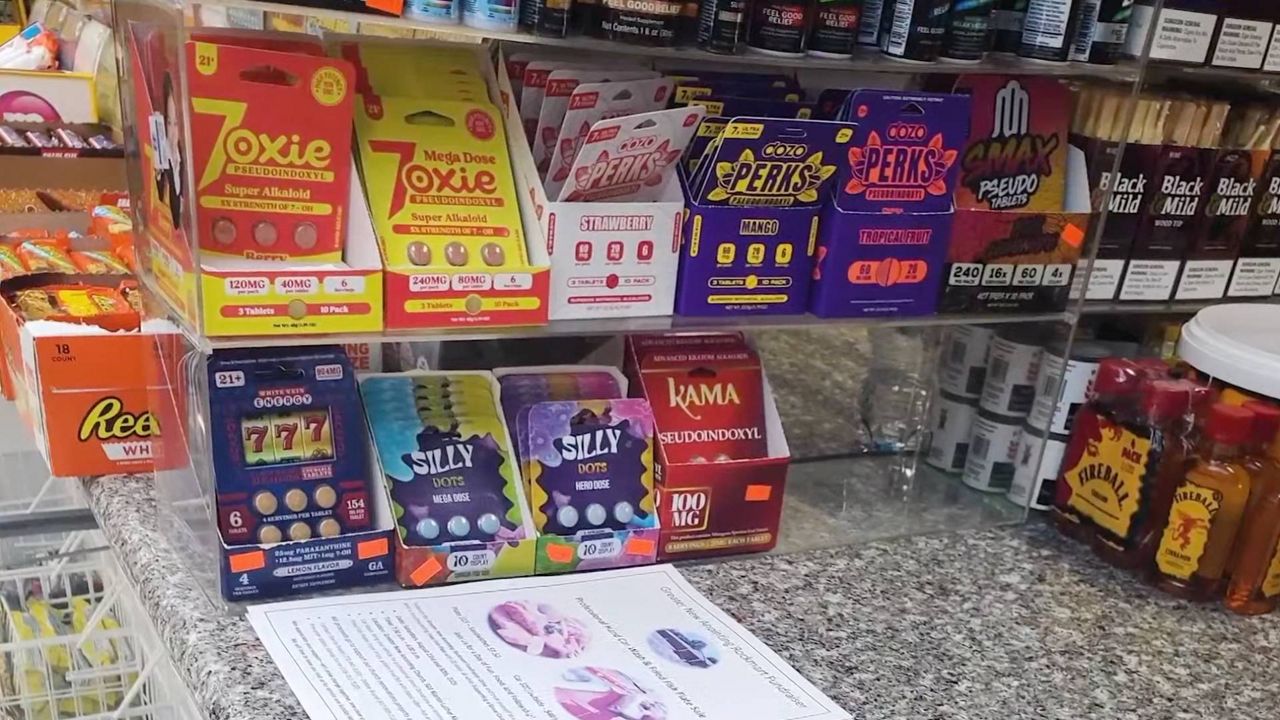
Walk into some gas stations, convenience stores, smoke shops, or vape stores and you may find brightly packaged pills, shots, gummies, powders, and extracts displayed alongside ordinary consumer products.
Some promise energy. Others are marketed for relaxation, mood, pain relief, focus, or a sense of well-being. Certain products may be labeled as herbal supplements or kratom products, while others contain substances unfamiliar to many consumers.
The fact that these products can be purchased from a retail counter can create a dangerous assumption:
If a gas station can legally sell it, it must be reasonably safe.
That assumption can be wrong.
Products containing substances such as tianeptine and highly concentrated 7-hydroxymitragynine (7-OH) have attracted increasing concern from federal regulators, physicians, poison centers, and addiction professionals.
The issue is becoming particularly urgent in 2026.
In July 2026, America’s Poison Centers issued a health advisory reporting a sharp increase in exposures involving kratom and kratom-derived products. Poison Centers recorded 3,803 exposure cases in all of 2025 and another 3,190 cases by June 30, 2026, putting 2026 on pace for a substantial year-over-year increase. Among reported single-substance exposures, serious health effects and hospitalizations were not uncommon.
Meanwhile, the FDA has warned consumers about tianeptine, sometimes called “gas station heroin,” and has taken action against concentrated 7-OH products because of their opioid activity and potential for abuse.
For families across Lexington and Central Kentucky, these developments are changing what people need to understand about psychoactive products sold openly at gas stations, smoke shops, vape stores, and convenience stores.
Bright colors, gummies, and familiar retail packaging can make psychoactive products appear less risky than their ingredients and potency suggest.
“Gas station drugs” is not a medical diagnosis or formal drug category.
It is an informal term describing psychoactive products that may be available through gas stations, convenience stores, smoke shops, vape stores, and similar retailers without a traditional prescription.
The category can include very different substances and formulations.
Two that deserve particular attention are:
Tianeptine, an unapproved drug sometimes marketed as a supplement, nootropic, mood enhancer, or alternative to opioids.
7-hydroxymitragynine (7-OH), an opioid-active compound associated with kratom that is increasingly being sold in highly concentrated products such as tablets, shots, gummies, and other formulations.
These substances are not identical, and products containing them should not all be treated as though they carry the same pharmacology or risk.
What connects them is a larger public-health concern: consumers may encounter products capable of producing powerful psychoactive or opioid-like effects in retail environments that do not resemble traditional drug markets.
Why Gas Station Drugs Are Becoming a Bigger Concern
The availability of these products has evolved rapidly.
The FDA reported in 2025 that concentrated 7-OH products were becoming readily available online and in gas stations, corner stores, and vape shops. The agency expressed particular concern about products sold as flavored gummies and other formulations that could appeal to younger consumers.
Then came stronger warning signs.
America’s Poison Centers reported in July 2026 that Poison Centers received 593 reports involving 7-OH exposure during 2025.
From January 1 through June 30, 2026, there were already 901 reports.
Average monthly 7-OH cases during the first half of 2026 represented a 102% increase compared with the average during the final six months of 2025.
That makes 7-OH one of the most important emerging substances for consumers and families to understand.
Gas stations and convenience stores can create a sense of familiarity that does not necessarily reflect the pharmacological risk of products sold inside.
The Most Important Gas Station Drugs to Know About
Not every supplement sold in a convenience store is inherently dangerous.
The concern centers on particular psychoactive products and concentrated formulations.
Tianeptine, or “Gas Station Heroin”
Tianeptine is perhaps the substance most closely associated with the phrase gas station drug.
It is sometimes called “gas station heroin” because products containing it have been sold through convenience stores, gas stations, vape shops, smoke shops, and online retailers.
Tianeptine is used medically in some other countries, but the FDA has not approved tianeptine for any medical use in the United States. The agency says it is also not a lawful dietary ingredient.
Products have been sold under names including:
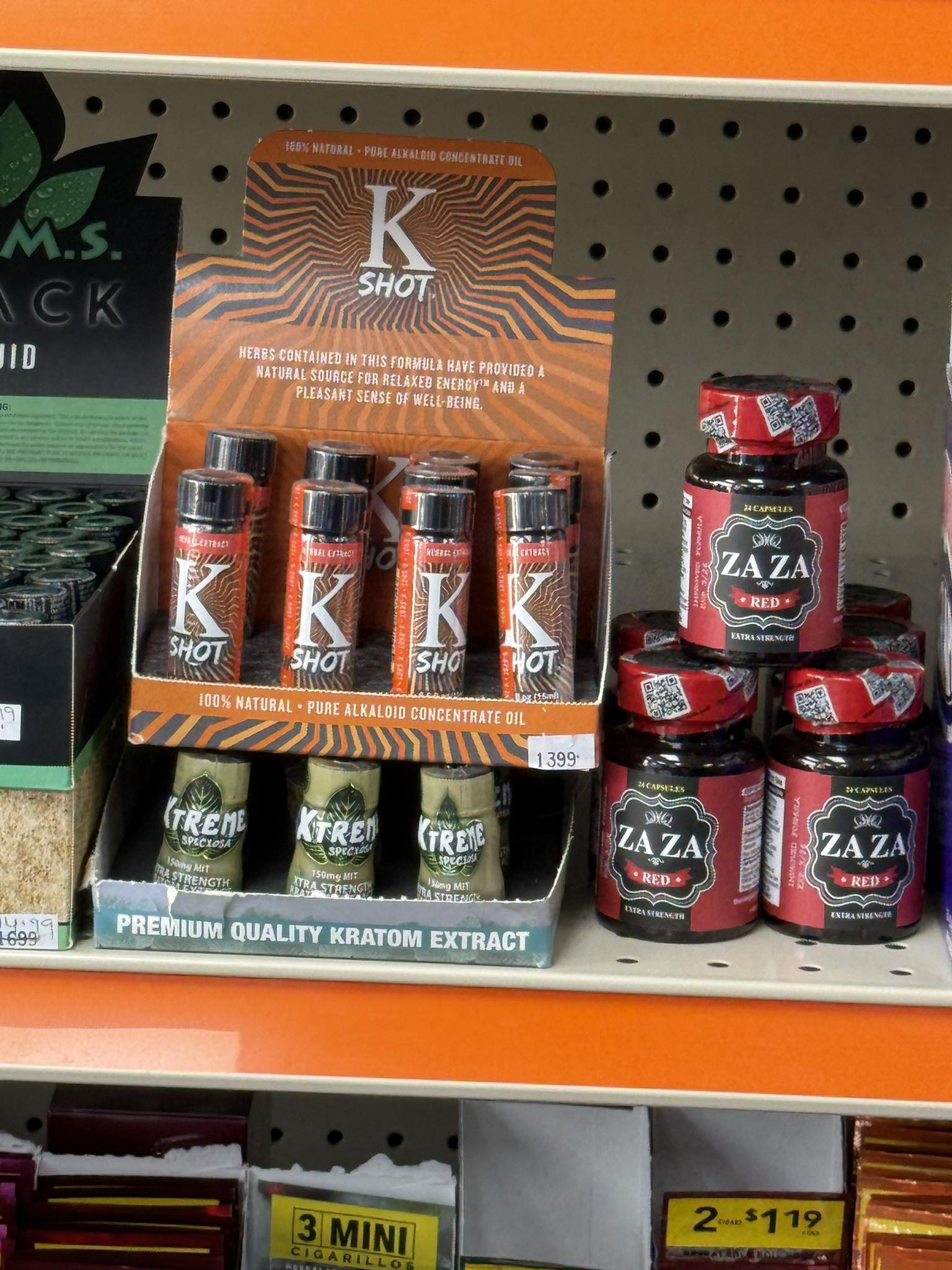
ZaZaTianna/TianaaNeptune’s FixPegasusTD Red
Brand names and formulations can change, however, so identifying a substance based only on branding is unreliable.
The FDA has warned that tianeptine products may be marketed as nootropics, research chemicals, supplements, or products claiming to improve mood, brain function, anxiety, depression, pain, or opioid-related problems.
Why Is Tianeptine Dangerous?
One reason tianeptine deserves particular attention is its activity at opioid receptors.
At sufficiently high doses, it can produce opioid-like effects, including euphoria. Repeated use can also lead to tolerance, dependence, compulsive use, and withdrawal.
FDA reports have linked tianeptine products with serious adverse events including seizures, loss of consciousness, hospitalization, and death. The agency has also warned about potentially dangerous interactions with other medications.
The number of reported exposures has increased substantially.
A study of U.S. poison center data found 892 single-substance tianeptine exposures between 2015 and 2023, with the exposure rate increasing approximately 1,400% over that period. About 40% of cases required medical admission.
FDA data subsequently showed poison center cases rising from only four in 2013 to roughly 350 in 2024.
Easy availability does not mean low risk.
What Is 7-OH?
Another rapidly emerging concern is 7-hydroxymitragynine, commonly shortened to 7-OH.
7-OH is associated with the kratom plant, but an important distinction needs to be made.
Traditional kratom leaf and highly concentrated 7-OH products are not necessarily equivalent.
The FDA specifically made this distinction when it announced action against concentrated 7-OH products in July 2025. The agency said its action was targeting 7-OH rather than natural kratom leaf products.
Some commercial products contain concentrated amounts of 7-OH far beyond what consumers might associate with ordinary botanical kratom.
The FDA has described 7-OH as an opioid and warned that concentrated products have significant abuse potential because 7-OH binds to opioid receptors. The agency has also said there are no FDA-approved drugs containing 7-OH and that 7-OH cannot lawfully be marketed as a dietary supplement.
The 2026 Surge in 7-OH Poison Center Cases
The latest poison-center data make 7-OH especially newsworthy.
America’s Poison Centers reported 901 7-OH exposure cases during only the first six months of 2026, compared with 593 during the entirety of 2025.
Among cases reporting exposure to 7-OH alone:
38.8% experienced serious health problems.
63.8% were treated at a healthcare facility.
20.5% were hospitalized.
Reported effects included nausea and vomiting, agitation, confusion, sweating, rapid heart rate, elevated blood pressure, breathing problems, excessive sleepiness, loss of consciousness, seizures, dependence, and withdrawal.
This is not simply an abstract regulatory debate.
Poison centers are seeing a rapidly increasing number of real-world exposures.
Is 7-OH the Same Thing as Kratom?
Not exactly, and this distinction is important.
Kratom comes from the leaves of Mitragyna speciosa, a tree native to Southeast Asia. Its leaves naturally contain several alkaloids, including mitragynine and much smaller amounts of 7-hydroxymitragynine.
Modern manufacturing can create products with much more concentrated levels of particular alkaloids.
That means a highly concentrated 7-OH tablet or shot should not automatically be treated as equivalent to traditional kratom leaf.
The FDA has explicitly focused its recent regulatory concerns on concentrated 7-OH products rather than natural kratom leaf.
For consumers, the distinction matters because packaging may emphasize “kratom” while providing an incomplete picture of the strength or pharmacology of the actual product.
Why “Legal” Does Not Necessarily Mean Safe
One of the most persistent misconceptions surrounding gas station drugs is that retail availability equals government approval.
It does not.
A product sitting on a convenience-store shelf has not necessarily gone through the FDA drug-approval process.
It may not have been evaluated in controlled clinical trials for the purpose claimed on its packaging.
And the amount of an active compound in the product may not necessarily be obvious to the consumer.
Tianeptine demonstrates this problem particularly clearly.
Despite appearing in products sold through ordinary retail stores, tianeptine is not FDA-approved for any medical use in the United States.
Poison-center and FDA warnings have emphasized that tianeptine products marketed as supplements may contain potent psychoactive ingredients and that consumers should not assume strength or formulation is standardized.
A storefront is a distribution channel.
It is not a guarantee of safety.
Gas Station Drugs Can Produce Dependence
People sometimes associate addiction exclusively with substances such as heroin, fentanyl, cocaine, or methamphetamine.
But the brain responds to pharmacology, not the location where a substance was purchased.
A substance does not become less capable of causing dependence simply because it came from a gas station rather than an illicit dealer.
Repeated exposure to opioid-active substances can cause the nervous system to adapt.
Over time, someone may find that the amount they previously used no longer produces the same effect.
They may increase their dose or use the product more frequently.
Eventually, stopping can become difficult because withdrawal symptoms emerge.
Both tianeptine and 7-OH have been associated with dependence and withdrawal.
What Can Gas Station Drug Withdrawal Feel Like?
Withdrawal varies according to the substance involved, dose, frequency, duration of use, other substances being used, and individual health factors.
Because tianeptine and concentrated 7-OH can have opioid-like effects, withdrawal may share characteristics with opioid withdrawal.
Symptoms can potentially include restlessness, anxiety, sweating, gastrointestinal problems, muscle discomfort, sleep disturbance, agitation, cravings, and mood changes.
The exact experience can vary considerably.
People using large amounts, multiple substances, or products with uncertain ingredients should not assume they know exactly what their body has become dependent on.
A clinical assessment can help determine the safest approach.
The Packaging Can Make These Products Look Safer Than They Are
Presentation matters.
An unfamiliar psychoactive substance packaged in a brightly colored bottle or gummy pouch can feel psychologically different from an illicit drug.
Words such as:
natural
herbal
supplement
wellness
energy
focus
or mood
can also influence how people perceive risk.
But marketing terminology does not determine pharmacology.
This is one reason the FDA has expressed concern about concentrated 7-OH products sold as fruit-flavored gummies and other appealing formulations, particularly because they could attract younger consumers.
A product can look like an energy supplement while containing a substance capable of producing opioid effects.
Small extract shots can resemble ordinary energy or wellness products even when they contain concentrated psychoactive compounds.
Another Risk: You May Not Know Exactly What You’re Taking
Uncertainty about formulation adds another layer of risk.
When warning consumers about Neptune’s Fix, the FDA stated that the product labels listed tianeptine but that the products could contain other harmful ingredients not listed on the label.
That creates obvious problems.
A person may make decisions about dosage or drug combinations based on incomplete information.
Someone may also arrive at an emergency department believing they took one substance when they were actually exposed to something else.
Unknown potency becomes especially concerning when multiple psychoactive substances are combined.
Mixing Gas Station Drugs With Other Substances Can Increase Risk
Using an unfamiliar psychoactive product becomes even more unpredictable when alcohol, opioids, benzodiazepines, prescription medications, or other drugs are involved.
This is especially concerning when substances affect overlapping systems in the brain.
Sedating or opioid-like substances can contribute to excessive sedation and impaired breathing. Stimulant-like effects can place additional stress on the cardiovascular system.
And when the exact ingredients or concentrations are uncertain, predicting an interaction becomes even harder.
The FDA has specifically warned that tianeptine products can interact with other medications in potentially life-threatening ways.
Signs Gas Station Drug Use May Be Becoming a Problem
Not everyone who tries a psychoactive product will develop an addiction.
But certain changes deserve attention.
A person may begin using the product more frequently than intended.
The amount needed to produce the desired effect may increase.
They may start visiting multiple stores or ordering products online to maintain a supply.
They may become anxious about running out.
Attempts to reduce or stop may produce withdrawal symptoms.
Money that previously went toward ordinary expenses may increasingly go toward pills, shots, extracts, or gummies.
Family members may notice changes in mood, sleep, energy, responsibilities, or behavior.
And perhaps most importantly, the person may continue using the product despite recognizing that it is causing physical, psychological, financial, occupational, or relationship problems.
At that point, the issue is no longer whether the product came from a gas station.
The relevant question is whether dependence or a substance use disorder has developed.
Gas Station Drug Use Can Be Easy to Hide
Another challenge is that these products may not carry the same visual stigma as traditional illicit drugs.
Someone does not need to meet a dealer.
They may not possess obvious drug paraphernalia.
Purchases can look like ordinary convenience-store transactions.
Small bottles, supplement containers, tablets, gummies, or packets may not immediately concern family members.
That can allow escalating use to remain unnoticed for longer.
For parents, partners, and family members, unfamiliar products appearing repeatedly around the home may be worth investigating rather than assuming they are ordinary supplements.
Why People Start Using Gas Station Drugs
People use these substances for many different reasons.
Some are looking for energy or relaxation.
Others are trying to manage anxiety, depression, stress, or chronic pain.
Some may have heard that a product provides an opioid-like effect without believing it carries opioid-like risks.
Others may begin using tianeptine, kratom-derived products, or similar substances in an attempt to manage withdrawal from another drug.
That last situation can become particularly complicated.
A person trying to stop one substance may unintentionally develop dependence on another.
The FDA has warned that tianeptine products have been illegally marketed with claims related to pain, anxiety, depression, and opioid use disorder despite lacking FDA approval for those purposes.
If someone is using gas station products to self-treat withdrawal, addiction, anxiety, depression, or pain, professional assessment may provide safer and better-studied options.
Are Gas Station Drugs Legal in Kentucky?
The legal landscape surrounding tianeptine, kratom-derived products, concentrated 7-OH, and other psychoactive products can be complicated and may change over time.
Federal drug approval, controlled-substance scheduling, Kentucky law, and whether a product can legally be marketed as a dietary supplement are separate questions.
A product being available for purchase in a gas station, smoke shop, vape store, or convenience store does not establish that it is FDA-approved, lawfully marketed for a claimed medical purpose, or medically safe.
For Kentucky consumers, the more important questions are what the product contains, how concentrated it is, whether federal regulators have issued warnings about it, and whether use is producing intoxication, cravings, withdrawal, or other health problems.
Store availability should never be treated as proof of safety.
What Parents Should Know About Gas Station Drugs
Parents often spend considerable time talking with teenagers and young adults about alcohol, marijuana, fentanyl, prescription pills, and vaping.
Gas station drugs deserve a place in that conversation.
The message does not need to be sensational.
It can be straightforward:
Something being sold openly does not mean it has been proven safe.
Young people should know that products marketed as supplements, kratom extracts, mood enhancers, nootropics, or energy products may contain powerful psychoactive substances.
They should also understand that “legal,” “natural,” and “available without a prescription” are not synonyms for harmless.
That education has become particularly relevant as regulators warn about products designed as flavored gummies and other formulations with potential appeal to younger consumers.
What to Do If Someone Has a Bad Reaction
Serious symptoms after taking a gas station drug should not be ignored.
Trouble breathing, seizures, severe confusion, inability to remain conscious, or loss of consciousness can indicate a medical emergency.
Because product ingredients may be uncertain, tell emergency medical professionals exactly what was taken whenever possible. Bringing the packaging or a photo of it may also help clinicians identify the substance involved.
Can You Become Addicted to Tianeptine or 7-OH?
Both substances raise concerns about dependence and problematic use.
Tianeptine has opioid-receptor activity and has been associated with abuse, tolerance, dependence, withdrawal, overdose, and serious adverse outcomes.
Concentrated 7-OH is also capable of opioid activity. FDA officials have warned about its abuse potential, while poison centers are reporting dependence and withdrawal among the health effects associated with exposure.
What begins as experimentation can therefore become repeated use.
And repeated use can eventually become difficult to stop.
When Gas Station Drug Use Requires Treatment
Someone does not have to wait until their substance use reaches a crisis before asking for help.
An assessment may be appropriate when someone:
uses tianeptine, 7-OH, or another psychoactive product every day,
needs increasing amounts,
experiences withdrawal between doses,
cannot reduce their use despite trying,
has strong cravings,
spends significant amounts of money obtaining the product,
uses the substance to feel normal,
combines it with other drugs,
continues despite health consequences,
or experiences repeated relapse after attempting to stop.
The appropriate treatment depends on the substance involved and the severity of the problem.
Some people may require medical stabilization or withdrawal management before beginning ongoing addiction treatment.
Others may be medically stable enough to begin structured outpatient care.
Treatment for Gas Station Drug Addiction in Lexington, Kentucky
Lexington Addiction Center provides addiction and dual diagnosis treatment in Lexington, Kentucky for people struggling with tianeptine, concentrated 7-OH, kratom-derived products, opioids, and other substances.
Treatment begins with an individualized clinical assessment. That is especially important with emerging substances because simply saying someone is using a “gas station drug” does not identify the exact compound, concentration, frequency of use, withdrawal risk, or other substances that may be involved.
The treatment team needs to understand what products are being used, how often they are taken, approximate amounts, whether alcohol or other drugs are involved, whether withdrawal develops between doses, previous treatment history, physical health, mental health symptoms, and the person’s current level of stability.
Lexington Addiction Center offers multiple levels of care, including drug and alcohol detox, a Partial Hospitalization Program (PHP), an Intensive Outpatient Program (IOP), and outpatient treatment. The appropriate starting point depends on withdrawal risk, medical needs, psychiatric symptoms, relapse risk, and the amount of daily structure a person needs.
Treatment may incorporate individual therapy, group counseling, family therapy, relapse prevention, medication-assisted treatment when clinically appropriate, psychiatric support, recovery education, holistic services, and treatment for co-occurring mental health disorders.
For someone using tianeptine or concentrated 7-OH regularly, withdrawal risk deserves particular attention because both substances can produce opioid-like effects and dependence.
The substance may be new.
The fundamentals of effective addiction treatment are not.
Frequently Asked Questions About Gas Station Drugs
What are gas station drugs?
“Gas station drugs” is an informal term for psychoactive products that can be purchased from gas stations, convenience stores, smoke shops, vape stores, or similar retailers. Examples receiving significant public-health attention include tianeptine and concentrated 7-OH products.
What is gas station heroin?
“Gas station heroin” is a nickname commonly used for tianeptine, an unapproved drug found in products sold through some gas stations, convenience stores, vape shops, and online retailers. The FDA warns consumers not to purchase or use tianeptine products.
What is ZaZa Red?
ZaZa Red is one brand name that has been associated with products containing tianeptine. Poison centers and federal regulators have warned about the risks associated with tianeptine-containing products.
What is 7-OH?
7-OH stands for 7-hydroxymitragynine, an opioid-active compound associated with kratom. Highly concentrated 7-OH products have become increasingly available in forms including tablets, gummies, shots, and drink mixes.
Is 7-OH the same as kratom?
Not exactly. 7-OH is associated with the kratom plant, but concentrated commercial 7-OH products can be substantially different from traditional kratom leaf. The FDA has specifically distinguished its action against concentrated 7-OH from natural kratom leaf.
Are gas station drugs FDA-approved?
Retail availability does not mean FDA approval. Tianeptine is not FDA-approved for any medical use in the United States, and the FDA says there are no FDA-approved 7-OH drugs.
Can gas station drugs cause addiction?
Some can. Tianeptine and concentrated 7-OH have opioid activity and have been associated with abuse, dependence, and withdrawal.
Can you overdose on tianeptine?
Tianeptine has been associated with serious poisoning, hospitalization, loss of consciousness, seizures, and deaths.
Can 7-OH cause withdrawal?
Yes. America’s Poison Centers lists dependence and withdrawal syndromes among reported effects associated with 7-OH exposure.
Why are 7-OH products concerning in 2026?
Poison Centers reported 901 7-OH exposures during the first six months of 2026, compared with 593 during all of 2025. Average monthly reports during the first half of 2026 were 102% higher than during the last six months of 2025.
Are products from a gas station safer than street drugs?
Where a product is purchased does not establish its safety. Some products available through ordinary retailers contain powerful psychoactive compounds and may not be FDA-approved or tested as medications for the conditions they claim to address.
Should I stop taking tianeptine or 7-OH suddenly?
If you use one of these products regularly and experience withdrawal between doses, speak with a healthcare professional about the safest way to stop. The appropriate approach depends on the substance, amount, frequency of use, other drugs involved, and your medical history.
Does Lexington Addiction Center treat addiction to emerging drugs?
Treatment for an emerging substance begins with an individualized assessment. Lexington Addiction Center can evaluate substance use, withdrawal risk, co-occurring mental health concerns, and the appropriate level of care. Depending on clinical need, treatment may include detox, PHP, IOP, outpatient care, medication-assisted treatment, therapy, and dual diagnosis support.
The Bottom Line on Gas Station Drugs
The most dangerous misconception about gas station drugs may be the simplest one:
“They sell it at the store, so how dangerous could it really be?”
Recent evidence provides an increasingly clear answer.
Tianeptine products have been associated with addiction, withdrawal, seizures, loss of consciousness, hospitalization, overdose, and death. Concentrated 7-OH products have become a growing concern because of their opioid activity and rapidly increasing poison-center exposures.
In 2026, the issue has become even harder to dismiss. Poison Centers are seeing rapidly rising reports involving kratom derivatives and concentrated 7-OH products, including serious health effects and hospitalizations.
A substance does not become safe because it comes in a colorful bottle.
It does not become harmless because it is called a supplement.
And it does not stop affecting opioid receptors because it was purchased under fluorescent lights at a convenience store.
If use has become difficult to control, withdrawal has started, or someone is using these products to manage another addiction or mental health condition, professional treatment can help identify a safer path forward.
Find Addiction Treatment in Lexington, KY
If you or someone you care about is struggling with tianeptine, 7-OH, kratom-derived products, opioids, or another substance, Lexington Addiction Center in Lexington, Kentucky can help determine the appropriate next step.
Our team provides individualized addiction and dual diagnosis treatment through detox, PHP, IOP, and outpatient care based on each person’s substance use, withdrawal risk, mental health needs, recovery history, and current level of stability.
Lexington Addiction Center is located at 351 Burley Ave, Lexington, KY 40503.
Dr. Vahid Osman is a Board-Certified Psychiatrist and Addictionologist with extensive experience treating mental illness, chemical dependency, and developmental disorders. Dr. Osman trained in Psychiatry in France and in Austin, Texas. Read more.
Joshua Sprung serves as a Clinical Reviewer at Lexington Addiction Center, bringing a wealth of expertise to ensure exceptional patient care. Read more.
The Joint Commission Awarded The Gold Seal of Approval® for meeting rigorous performance standards in safety, quality, and patient care.
LegitScript Certified Validates compliance with laws and regulations, confirming transparency and accountability in addiction treatment marketing.
BBB Accredited Demonstrates ethical business practices, client satisfaction commitment, and a trusted reputation in the community.
Psychology Today Verified Verified listing on Psychology Today, a trusted directory for addiction treatment providers and behavioral health centers.
HIPAA Compliant Ensures all patient health information is protected and managed under strict federal privacy and security standards.
NAATP Member Lexington Addiction Center is a proud member of the National Association of Addiction Treatment Providers (NAATP).
5-Star Google Reviews Recognized for consistent 5-star ratings, reflecting excellent care and trusted patient experiences at Lexington Addiction Center.
Help.org Recognition Recognized by Help.org for quality addiction treatment services and community impact.
At Lexington Addiction Center, we believe that recovery is a journey, not a destination. That’s why we offer a comprehensive continuum of care, delivered by a team of experienced and compassionate professionals. Our team is made up of licensed therapists, counselors, nurses, and other professionals who are passionate about helping people achieve lasting sobriety. Whether you are just starting your recovery journey or you are a seasoned veteran, we are here to support you every step of the way. We believe in you, and we are committed to helping you achieve your recovery goals.
Explore Lexington Addiction Center’s drug & alcohol detox rehab treatment center in Lexington, KY and step into private therapy offices, spacious group rooms, and tranquil lounges where thoughtful design supports every stage of substance-use recovery.
Yes, Your Insurance Covers Detox and Rehab Treatment
Complete a free, confidential Verification of Benefits to learn more about what resources may be available to you.
Contact Us Today
Addiction and co-occurring disorders don’t have to control your life. Lexington Addiction Center is waiting with open arms to give you the tools necessary for lasting change. Reach out to us today to learn more.