


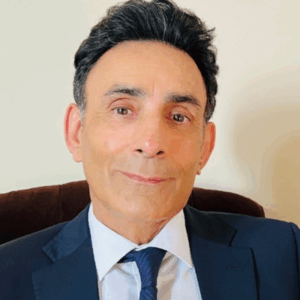
Dr. Vahid Osman is a Board-Certified Psychiatrist and Addictionologist with extensive experience treating mental illness, chemical dependency, and developmental disorders. Dr. Osman trained in Psychiatry in France and in Austin, Texas. Read more.

Lexington Addiction Center provides structured outpatient addiction treatment for people who need more support than weekly counseling without attending a full-day program. IOP combines group therapy, individualized planning, and support for co-occurring mental health needs while clients continue living at home or in another appropriate setting.
Our admissions team can explain current session availability, assess whether IOP is the right level of care, and help you understand insurance benefits before treatment begins.
An intensive outpatient program (IOP) offers scheduled therapy and recovery support several days per week without overnight admission. It generally provides more structure than standard outpatient counseling and less treatment time than a partial hospitalization program (PHP). The appropriate schedule depends on clinical needs and the program’s current availability.
IOP may be appropriate for adults who are medically stable, have a reasonably safe living environment, and can participate consistently in therapy. Some clients step down from PHP or residential treatment; others begin at IOP after an assessment. People with significant withdrawal symptoms or an immediate safety concern may need a higher level of care first.
Treatment planning may include group counseling, individual therapy, relapse-prevention strategies, family involvement, and coordination for mental health or medication needs when clinically appropriate. Clients practice coping skills between sessions and review progress with their treatment team.
For a higher level of daytime support, explore our partial hospitalization program. For a lower-intensity option, learn about standard outpatient treatment.
More intensive daytime structure for people who need a higher level of clinical support.
Structured therapy on a recurring schedule while living in an appropriate home environment.
Less frequent appointments for people who need ongoing support with greater independence.
Level-of-care recommendations are based on an individualized assessment, not scheduling preferences alone.
Mindfulness, stress-management strategies, and wellness practices may complement core clinical treatment when available.
Treatment planning may coordinate addiction counseling, co-occurring mental health care, and medication services when clinically appropriate.
Family counseling and education may support communication, boundaries, and recovery planning when appropriate.
Individual counseling can address triggers, cravings, relationships, trauma-related concerns, and personalized recovery goals.
The care team can evaluate when to step up to PHP or transition to standard outpatient treatment as needs change.
Co-occurring mental health symptoms and substance use can be addressed together through coordinated treatment planning.
You’ll connect with a compassionate admissions coordinator who understands what you’re going through.
We’ll ask about your drug use, medical history, and mental health to help build the right plan.
Our team can check your benefits and discuss deductibles, authorization requirements, and possible out-of-pocket costs. Coverage is not guaranteed.
If IOP is appropriate, admissions can explain current session availability and the next steps for enrollment.
IOP may be appropriate for people who need more structure than standard outpatient care but do not require 24-hour residential treatment. Good candidates are generally medically stable, able to live in a safe environment, and able to participate consistently in several treatment sessions each week.
IOP may include individual counseling, group therapy, relapse-prevention work, family therapy, medication management, trauma-informed treatment, holistic support, and dual diagnosis services when mental health and substance use concerns occur together.
IOP length is individualized. The schedule and duration depend on clinical needs, substance use history, mental health symptoms, progress in treatment, stability at home, and readiness to step down to a lower level of care.
Often, yes. IOP is designed to provide structured treatment while allowing many clients to continue working, attending school, parenting, or managing other responsibilities. Scheduling options depend on program availability and individual clinical needs.
IOP connects structured counseling with individualized recovery planning, support for co-occurring mental health concerns, and coordination with other levels of care. Confirm current group sizes and session times with admissions.
Start by contacting the admissions team for a confidential assessment. They can review your substance use, medical and mental health needs, home environment, insurance benefits, and determine whether IOP is the appropriate level of care.
Yes. Continuing care may include standard outpatient therapy, medication management, peer support, family services, alumni resources, and recovery planning to help maintain progress after structured IOP ends.
Family therapy and education may be included when clinically appropriate. These services can improve communication, rebuild trust, clarify healthy boundaries, and help loved ones support recovery without reinforcing harmful patterns.
A relapse does not automatically mean treatment has failed. The clinical team can reassess triggers, safety, withdrawal risk, medication needs, and treatment intensity. Depending on the situation, the plan may be adjusted or a higher level of care may be recommended.
Medication services may be incorporated or coordinated when clinically appropriate. Ask admissions which prescribing and medication-management services are currently available through the IOP program.
Speak with our admissions team about IOP eligibility, current scheduling, and insurance verification. We can help you understand the next appropriate step without pressure.




Cleveland Clinic. (2024, September 9). Substance use disorder (SUD): Symptoms & treatment. https://my.clevelandclinic.org/health/diseases/16652-drug-addiction-substance-use-disorder-sud
American Society of Addiction Medicine. (n.d.). About the ASAM Criteria. https://www.asam.org/asam-criteria/about-the-asam-criteria Default
American Society of Addiction Medicine. (2025, January 27). ASAM releases new assessment guide to help clinicians select an appropriate level of addiction care for patients. https://www.asam.org/news/detail/2025/01/27/asam-releases-new-assessment-guide-to-help-clinicians-select-an-appropriate-level-of-addiction-care-for-patients Default
American Society of Addiction Medicine. (2025). The ASAM Criteria, Fourth Edition: Level of Care Assessment Guide (Adults) [PDF]. https://downloads.asam.org/…/asam_loc-assessment-guide-print_all.pdf ASAM
Center for Substance Abuse Treatment. (2006). TIP 47: Substance abuse: Clinical issues in intensive outpatient treatment (Treatment Improvement Protocol Series). Substance Abuse and Mental Health Services Administration. https://textbooks.whatcom.edu/marketing/wp-content/uploads/sites/23/2017/06/TIP-47.pdf textbooks.whatcom.edu
Substance Abuse and Mental Health Services Administration. (2020). Clinical issues in intensive outpatient treatment for substance use disorders (PEP20-02-01-021) [Advisory PDF]. https://library.samhsa.gov/sites/default/files/pep20-02-01-021.pdf SAMHSA Library
National Institute on Drug Abuse. (2020). Drugs, brains, and behavior: The science of addiction—Treatment and recovery. https://nida.nih.gov/publications/drugs-brains-behavior-science-addiction/treatment-recovery National Institute on Drug Abuse
SMART Recovery. (n.d.). Home. https://smartrecovery.org/ SMART Recovery
SMART Recovery Global. (n.d.). About SMART Recovery Global. https://smartrecoveryglobal.org/about smartrecoveryglobal.org
Alcoholics Anonymous World Services, Inc. (n.d.). What is A.A.? https://www.aa.org/what-is-aa Alcoholics Anonymous
Narcotics Anonymous World Services. (n.d.). About the NA program. https://na.org/about-the-na-program/ Narcotics Anonymous World Services

Addiction and co-occurring disorders don’t have to control your life. Lexington Addiction Center is waiting with open arms to give you the tools necessary for lasting change. Reach out to us today to learn more.